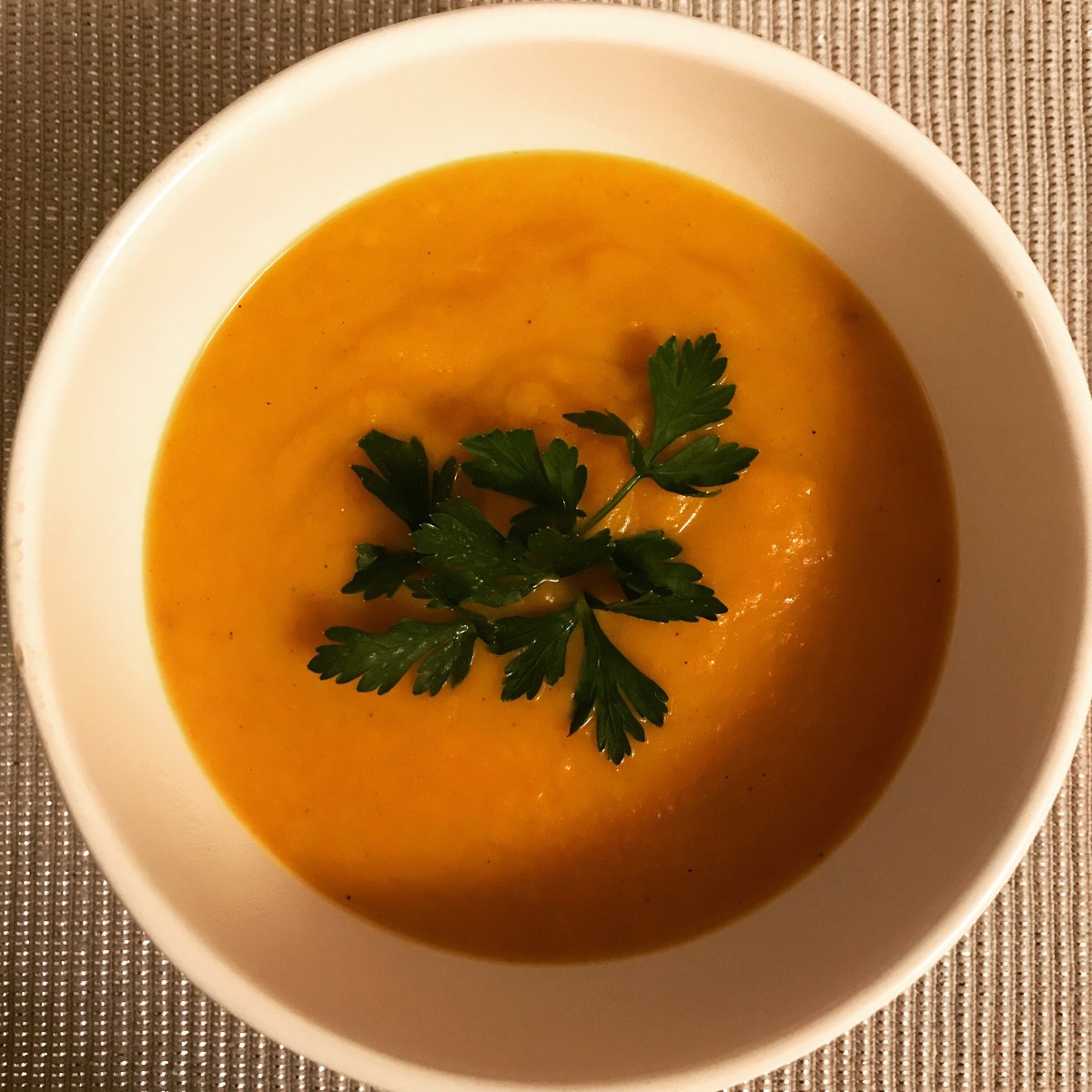
Spicy ginger and carrot soup

When I heard this combination mentioned recently I thought it makes sense. I also thought it sounds like something that could benefit from a bit of heat from a chilli, as well as the usual suspects onion and garlic. And I always tend to add potatoes to pureed soups, for that rich, smooth texture. I have just been experimental and  thrown ingredients together for this soup, however I do think the ginger, sweet carrot and spicy chilli make a good team. And did you know that ginger, chilli, garlic, onion and turmeric are all natural medicines to fight off those colds too, so perfect for boosting your immune system when the weather is getting cold outside.

4-5 medium-large potatoes (900g), peeled and cut into pieces
1 kg carrots, peeled and cut into pieces
100g fresh root ginger, peeled and chopped
2 garclic cloves, peeled and chopped
2 medium onions (I used red onions)
1 small green chilli (the smaller the variety, the hotter it will be), chopped
3 tbsp olive oil
1 tsp cumin powder
2 tsp turmeric (optional)
1 liter water
1/2 dl cream
salt and black pepper

1. Roughly chop onions. Heat the olive oil in a pan, and fry onion in medium heat for 5 minutes.

img_1358

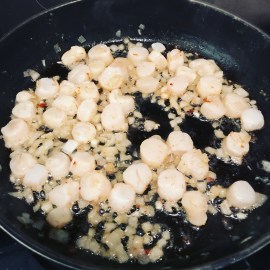
2. Add the ginger, garlic and chilli, and fry for few minutes. Add turmeric and cumin, and fry until fragrant.

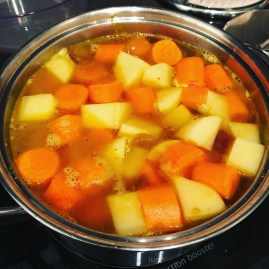
3. Add the carrots and potatoes, as well as water. Bring to boil, and cook, covered, for 45 minutes, or until carrots and potatoes are soft.
img_1357

4. Let cool slightly, and puree in a blender.

5. Add cream, and depending on thickness, a splash of water. Season with salt and pepper.
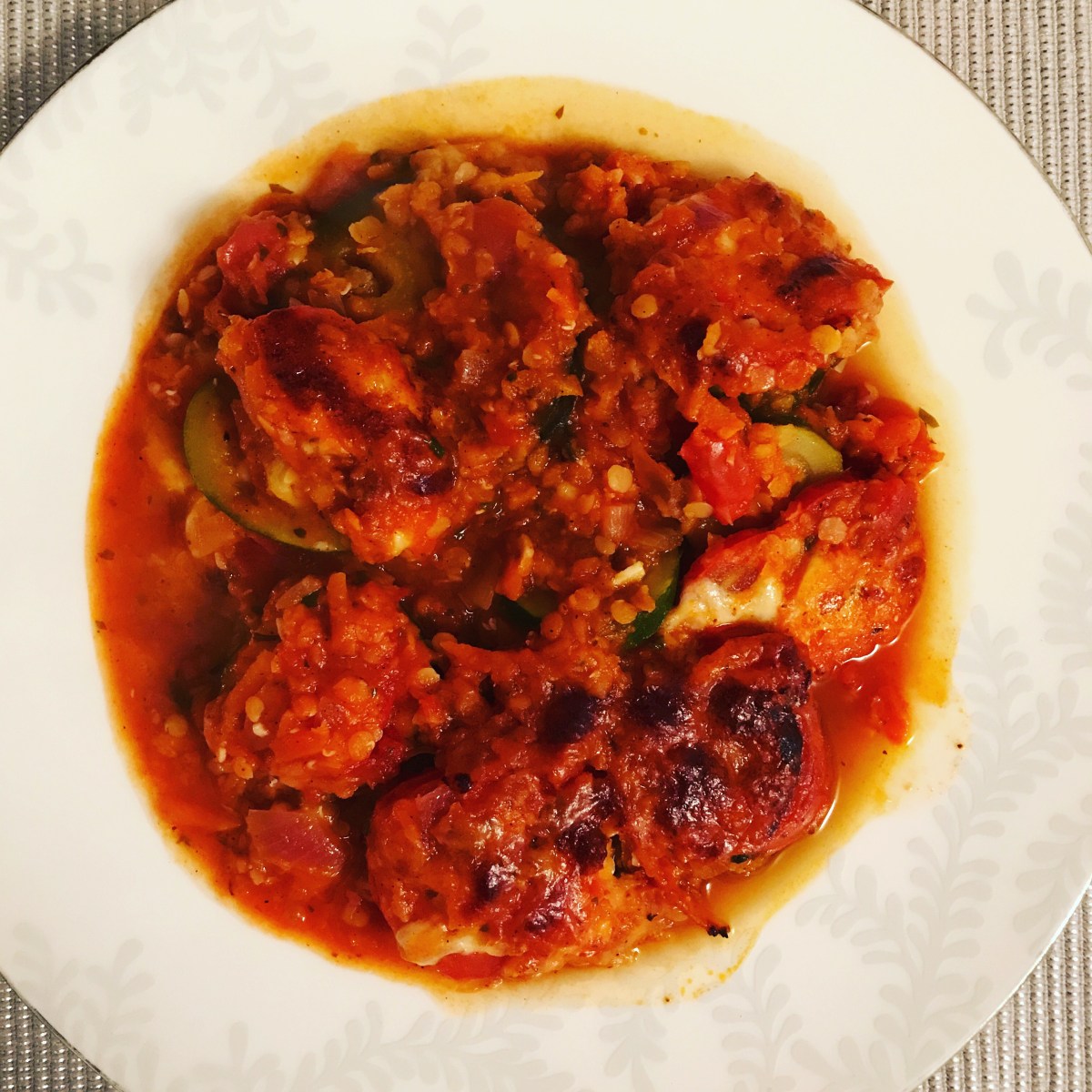
Vegetarian bake

This tasty vegetarian bake is a dish I learnt from my friend years ago, when we lived together as single ladies. Even though I’m more of a carnivore, this dish has stuck with me, and is something I make regularly, as it’s really flavoursome.

2 dl red lentils
1 onion
3 garlic cloves
1 carrot, peeled and grated
2 tins of chopped tomatoes
2 tbsp tomato puree
3dl vegetable stock
handful of fresh basil
3 tbsp olive oil
1 tsp salt
1 tsp ground black pepper
1 tbsp dried oregano
1-2 aubergines (eggplants)
4 large tomatoes
2 courgettes (zucchinis)
1-2 balls of mozzarella
grated parmesan cheese

1. Rinse the lentils, and drain in a sieve. Place in a saucepan, and cover with water. Bring to boil, and simmer for 15 minutes. Drain.

2. Finely chop onion and garlic, and fry in oil for 5 minutes. Add the carrot, chopped tomatoes, tomato puree, basil, stock, salt, pepper and oregano. Cook, stirring, for 5 minutes. Finally, add the cooked lentils.

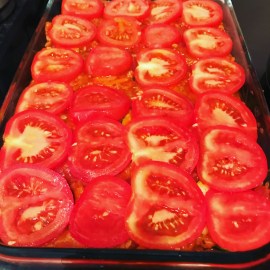
img_1321

3. Slice the aubergines, courgettes, tomatoes and mozzarella.

4. Layer in an oven dish. I tend to put a little bit of the sauce mixture at the bottom, as well as in between each layer, and also on top.

img_1324

5. Sprinkle parmesan cheese on top and cook in preheated oven 200°C / 390°F for 40 minutes.

Hake with scallop, brown shrimp and samphire

When I planned for this dish, I didn’t have anything in particular in mind. I chose hake because I try to alternate fish I use. I normally use smoked hake and make the same dish with it, so it was perfect time to experiment with unsmoked and cook it like I would normally cook cod, pan fried. For the accompaniment, I was just browsing throught the seafood section (I do my food shopping online and have it delivered, to save my precious time after work), and when I saw the small scallops and brown shrimps they sang out to me, wanting to be part of this dish. My husband would like me to get samphire more often than I do, so I decided to get that too. This recipe makes big portions, so you could probably also make this for 3, maybe even 4 people. I had some leftover puy lentils and quinoa, so I served the fish with that.

serves 2
400g fillet of unsmoked hake, cut in two pieces
70g brown shrimp
180g small scallops
90g samphire, washed
2 shallots
50g butter
1 tbsp lemon juice
1 dl frozen peas
1/2 dl cream
salt
white pepper

1. Melt the butter in a frying pan, and add the hake fillet pieces. Season both sides with a little bit of salt and pepper, and fry for about 3-4 minutes on each side. Move to a plate and cover with foil to keep warm.

2. Add finely chopped shallots to the same pan, fry for a minute or two, and add the scallops and lemon juice. Fry for few minutes, stirring.

img_1343

3. Add the peas, followed by samphire and shrimp. Season with a dash of pepper. You probably won’t need much salt, as the samphire itself is quite salty. Fry, stirring, for couple of minutes,  until all ingredients are warmed through.

img_1344

4. Add the cream, and warm through.

Pheasant breast and confit leg

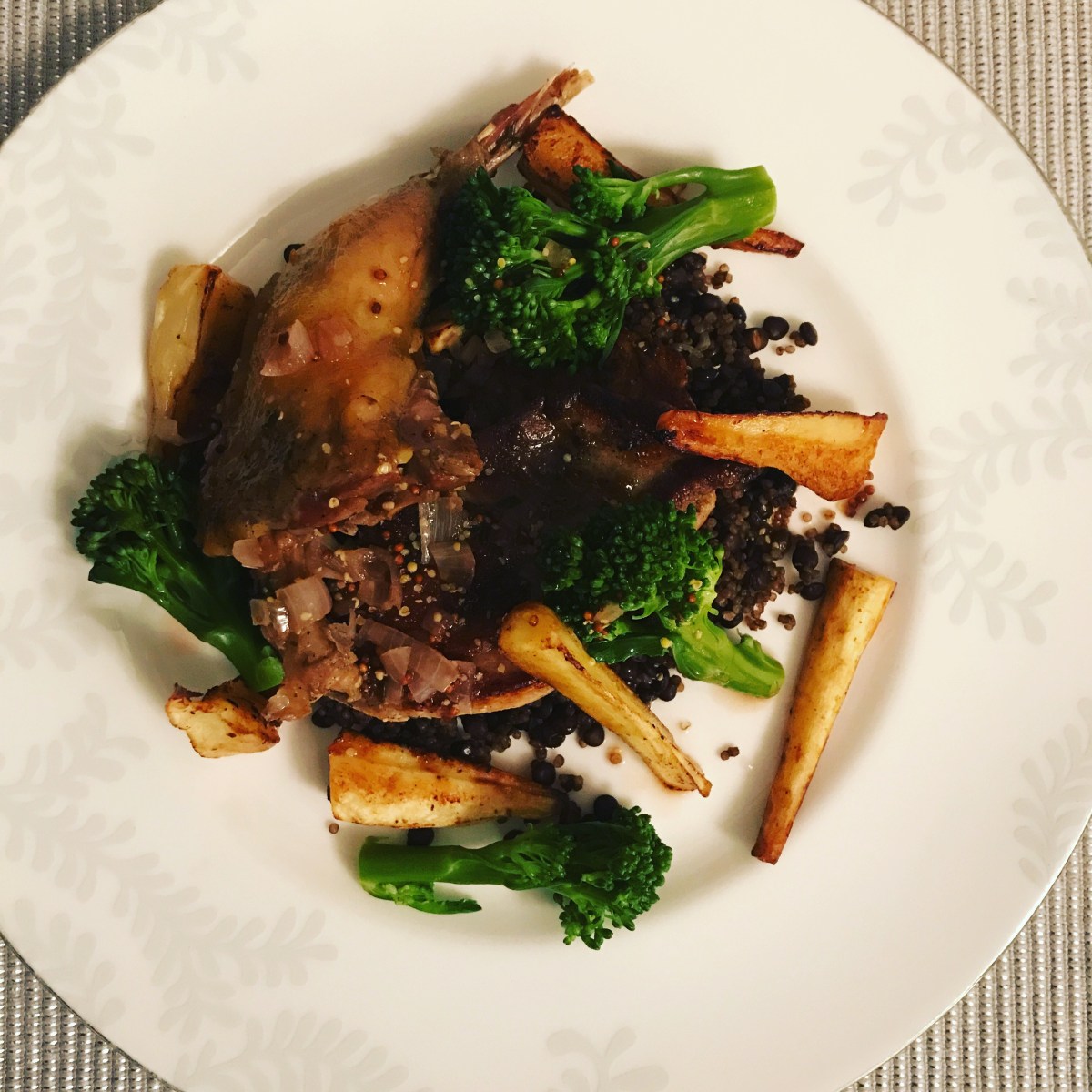
I was practicing my butchery skills with this dish, as I bought the whole bird, but if you don’t want to get your hands messy you can buy these ready prepared. There are a couple of things to keep in mind when cooking wild game: it is very lean meat, so care should be taken not to overcook it, as it will get tough otherwise. Also, it’s good to remember that the meat might contain a pellet or two on occasion. I served my pheasant with puy lentils and quinoa, roasted parsnips and steamed tenderstem broccoli.

Confit leg
sea salt
ground black pepper
thyme leaves
2 dl vegetable oil
2 dl duck fat
2 garlic cloves

Breast
1 garlic clove, finely chopped
1 tbsp olive oil
pinch of salt
ground black pepper
thyme leaves

Sauce
2 shallots
1 thyme stalk
1 dl port wine
1 tbsp sherry vinegar
1 dl chicken stock
1 tbsp grainy mustard
salt
black pepper

1. Rub some sea salt, ground black pepper and thyme leaves on the legs. Cover with cling film, and rest in the fridge for 1-2 hours.

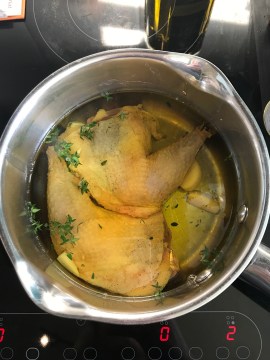
2. Wash the salt rub off the legs, and pat dry the them. Heat the oil – fat mixture to very low temperature,  including garlic cloves and thyme stalk. Place the legs in the oil, and cook on very low heat for 3 hours. Make sure you have enough oil/fat to cover the meat.

img_1316

3. Whilst the legs are cooking, marinate the breast, cover and place in the fridge for couple of hours.

4. Finely chop shallots, and fry in olive oil together with the thyme stalk until shallots are translucent. Add port, sherry vinegar and stock, and reduce by boiling uncovered until desired thickness. Add grainy mustard, check the taste and add salt and pepper if needed.

5. Pan fry the breasts for 1 minute, skin side down. Turn skin side up, and place in preheated oven 200°C / 390°F for 10 minutes.

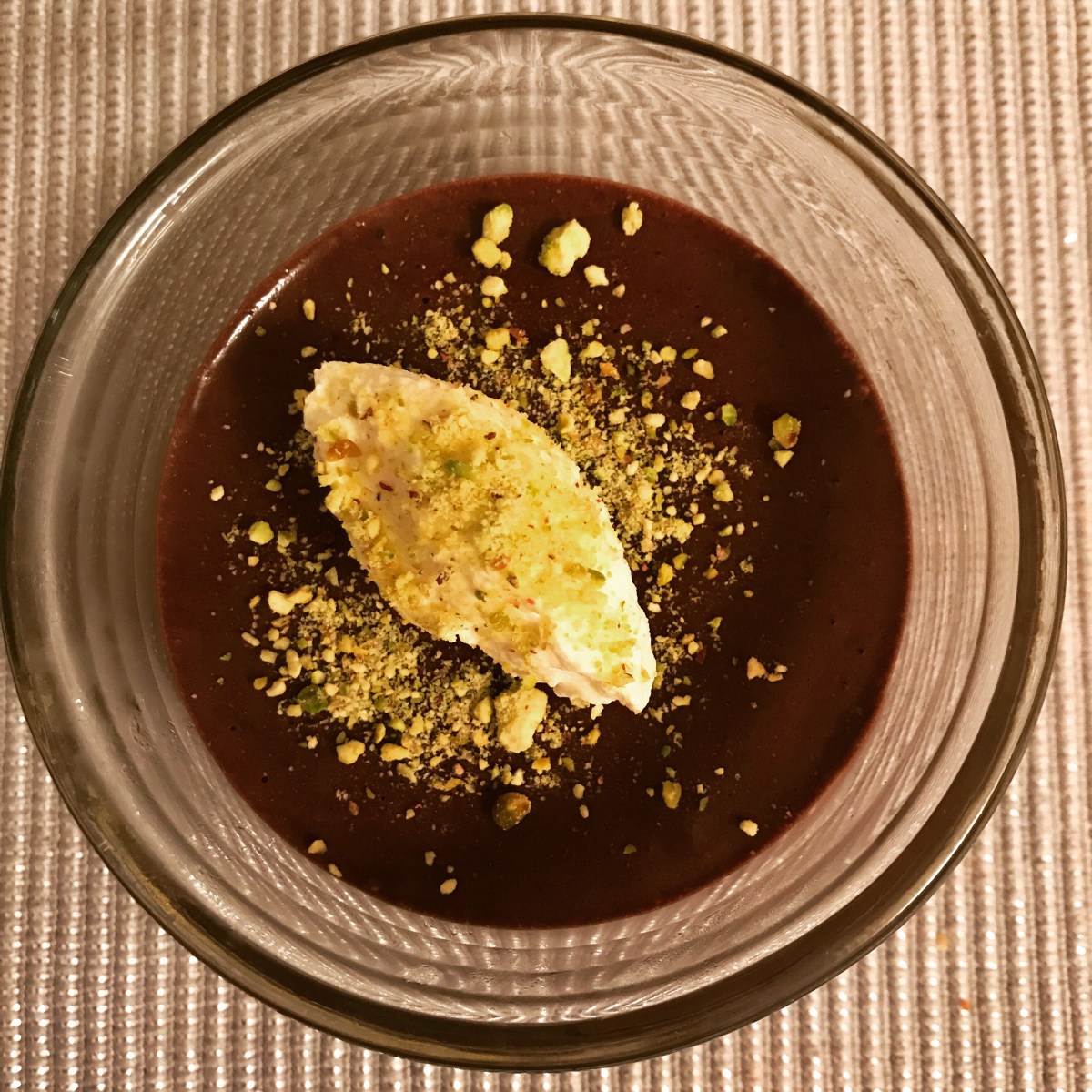
Dark chocolate mousse with pistachio crumb

I’m not sure why I don’t make this decadent dessert more often (my husband agrees!), as it only requires a few ingredients. You do need to get certain things right when making it or it might fail, but I still think it’s simple enough to make easily. Serve with a dollop of whipped cream to soothe the bitterness of the chocolate and add pistachio crumb for some crunch and texture. It’s very rich, so you won’t need big portion sizes.

serves 6-8
120g dark chocolate (I used 70%)
4 eggs, yolks and whites separated
1/2 dl caster sugar
~~~~~
handful of pistachios, crushed
whipped cream

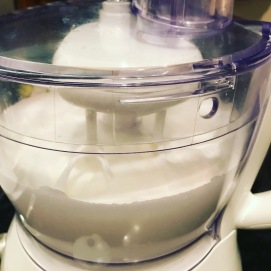
1. Whisk the egg whites and sugar together into a thick foam.

img_1308

2. Gently melt the chocolate in a bain marie (water bath), stirring with a wooden spoon. Once the chocolate is all melted and smooth, remove from the bain marie and let cool for 3 minutes. Pour the yolks into the chocolate, stirring. The mixture will become stiff at this stage.

3. Little by little, add spoonfuls of the egg white foam, folding together with the chocolate mixture. Try not to mix too hard, just gently fold them together, as hard mixing may ‘kill’ the foamy texture required for the mousse. The colour of the mousse will become lighter as you go along.

4. Put the mousse in ramekins, cover with cling film and chill in the fridge for few hours to allow the mousse to set.

img_1307

Butter chicken curry

A lot of people seem to think that curry always means spicy, and if they don’t like spicy food they’re not interested. You couldn’t be further from the truth thinking this way. It is true that it can often be spicy, but there is so much more curry (or Indian food) can offer. I think the main thing about Indian food is flavor, spicy or not. I’m actually a friend of spicy food, however this is one of my favourite non-spicy curries. It’s amazing the fragrance you will get when cooking this food, certain to awaken your appetite. Last time I made this I thought the sauce itself was too runny, so I reduced the liquid in todays’ recipe, however I thought it might have been too thick to my taste this time. The recipe is for my cooking today, and if you want yours slightly runnier just add a bit more of the liquids. Cooking Indian curries can usually be a little bit time consuming in terms of needing you to be organized well in advanced, needing preparations a long time before cooking, but I can promise you it’s all worth it.

2-3 chicken breasts
~~~~~
100ml natural yoghurt
2 garlic cloves
1 tsp fresh root ginger (about half a thumb size piece, then cut the skin off)
1 tsp garam masala
1 tsp ground coriander
1/2 tsp chilli powder
1 tbsp vinegar
2 tbsp tomato puree
~~~~~
50g butter
1 cinnamon sticks
3 cardamom pods (bruised)
1 medium onion or a few shallots
1/2 tsp salt
2 tsp ground paprika
1 dl chicken stock (click here for recipe)
1/2 – 1 tin of tomato puree (I used a small tin of 140g of double concentrate)
150ml cream

1. Finely chop garlic and peeled ginger, and mix all marinade ingredient together. Chop the chicken to desired size pieces. Mix into the marinade. Cover with cling film, and cover for overnight, or 6-8 hours (I have done this for less time when I haven’t been organized enough, but the longer you marinate the better it’ll be).

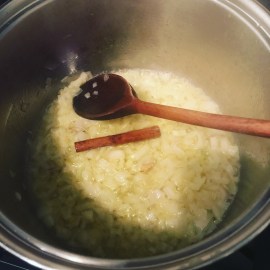
2. Finely chop onion. Heat the butter in a pan, and add the onions, cinnamon and cardamoms. For bruised cardamoms, put a knife over the pods, resting the knife flat side on the pods, and hit the knife with your fist. Cook until the onions become translucent, stirring.

img_1288

3. Add the chicken marinade, and cook for about 5 minutes.

4. Add all remaining ingredients apart from the cream, and cook, stirring occasionally, for 10 minutes. Then add the cream, and cook for another 10 minutes.

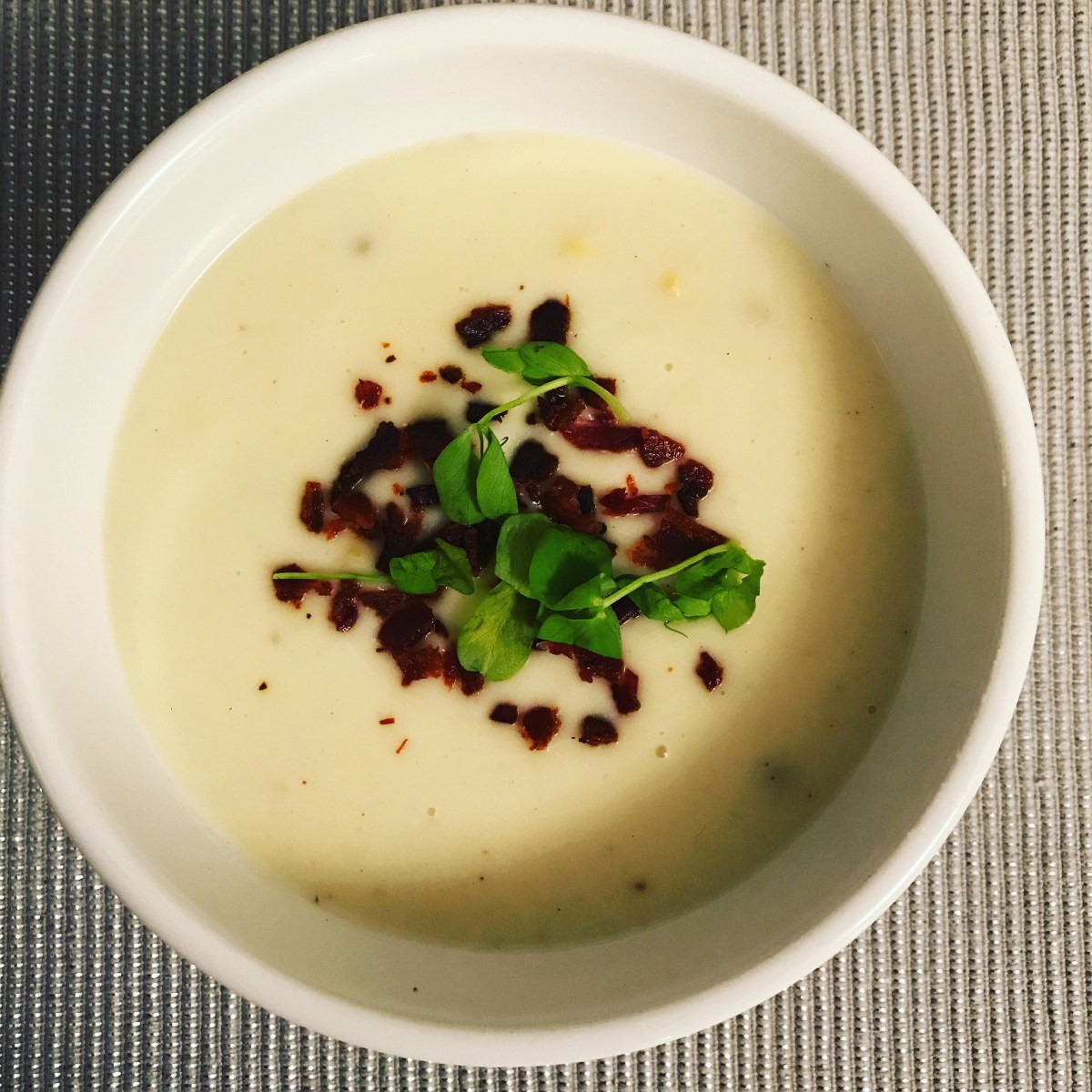
Cauliflower soup

This tasty soup is very easy and simple to make. I usually use some crispy bacon for some crunch and texture, but this can easily be left out to make the soup a vegetarian version.

1 cauliflower
4 large potatoes
2 medium onions
1 garlic clove
2 tbsp bouillon powder
2 dl double cream
2 dl
sweetcorn
salt
ground black pepper
1 liter
water
150g-200g
bacon

1. Peel and chop the potatoes, onions and garlic. Cut the  cauliflower, and add all four ingredients to a pan. Pour water over, and add the bouillon powder. Bring to boil and simmer until cooked and soft. If you don’t want to use bouillon powder you can always replace the water and the powder with same amount of vegetable stock.

2. Cook the bacon in the oven / under a grill, until overcooked but not burned.  I normally use smoked bacon, but use whatever bacon you prefer. Take out and let cool. Once cooled, crumble to small pieces by hand.

3. Once onions, potatoes, garlic and cauliflower are cooked. Let cool slightly, and puree in a blender. Pour back in the pan and add cream, sweetcorn and crispy bacon crumble. Season with salt and pepper.


Marinated oriental salmon

This salmon dish is something I make very regularly. The salmon itself can be steamed, pan fried, grilled or oven cooked. Today I added roasted bone marrow (which I’ve never cooked before) to this dish. In terms of flavour, it doesn’t really contribute much, but it’s supposed to offer some health benefits. I marinade the salmon, and then use the same liquid for the fried vegetables. I tend to use plain basmati rice for this, as the marinade mixture is full of flavour.

serves 2
salmon fillets
(beef bone marrow)
3/4 cup of basmati rice
~~~~~
Marinade
20ml light soy sauce
30ml dark soy sauce
10ml rice vinegar
50ml sesame oil
10ml fish sauce
20ml lemon juice
2 garlic cloves
thumb size piece of root ginger
1 small green chilli
1 shallot
~~~~~
2 mushrooms
1 carrot
1 courgette (zucchini)
handful of mangetouts
handful of baby sweetcorn

1. Finely chop ginger, garlic, chilli and shallot. Mix all marinade ingredients together. Put the salmon fillets in a re-sealable bag, and pour the marinade in. Marinate for 30 minutes, turning over half way through, so that both sides marinate.

img_1265

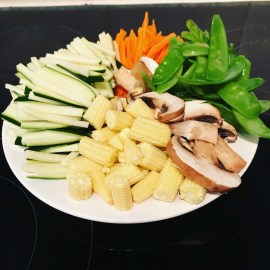
2. Chop the vegetables, to be ready for frying later.

img_1264

3. If using bone marrow, season with salt and pepper, and roast in an preheated oven 180°C / 355°F for 20 minutes. Cooked marrow will easily come off the bone with a spoon.

4. Measure 3/4 of a cup of basmati rice. Wash the rice in a bowl or sieve, until the water doesn’t get cloudy anymore (this washes off the starch). Put the washed rice in a pan, add a pinch of salt. Add 1 1/4 cups of boiled water (use same cup /measure you use for the rice). Bring to boil, stir, then reduce to simmer. It should take about 15 minutes until all water has been absorbed.

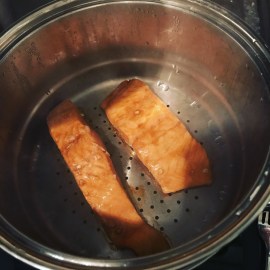
5. Salmon cooks quickly, which ever way you cook it. I think gentle steaming is a great way to keep the salmon juice and moist. You’ll only need about 7 minutes on a low heat, cover with a lid.

img_1262

6. Fry the vegetables in hot oil (I used ground nut oil for this, but you can also use other vegetable oils) for about 5 minutes. Pour the salmon marinade liquid into the pan, and fry for another few minutes.

Salmon soup

I would probably go as far as to say this is my all time favourite Finnish food. My husband and I have been together for nine years, however he still hasn’t bought into the Finnish style soups of thin liquid base with chunky pieces. He does enjoy the flavour of this soup, so I’ve added a step to make this soup (step 1) slightly thicker. It does actually make it richer, so this has now become part of my recipe.

500g salmon
150g cooked prawns
5-6 large potatoes
1.5 liters water
100g fine green beans
3 large onions
bunch of dill
celery stick
2 dl frozen peas
2-3 dl double cream
2 tbsp bouillon powder
sea salt
ground white pepper

1. Peel and cut half of the potatoes into small pieces. Put the pieces in a large pan, with 1 liter of water. Boil for about 30 minutes, until soft, and mash the potatoes.

2. Whilst stage 1 is cooking, peel and cut the remaining potatoes. Finely chop celery. Add both ingeriendts to the mashed potatoes.

3. Cut the green beans to about 2.5cm (an inch) length pieces and add to potatoes.

4. Slice all onions, and add to the soup. Pour the remaining 5 dl water into the pan, and add the bouillon powder, pinch of sea salt and pepper.

5. Cut the salmon into bite size pieces. I usually  buy salmon with skin on, so once I’ve removed the skin I have to wash the pieces, to make sure none of the large scales end up in the soup.

6. Add the salmon to the soup with the peas and prawns (as long as the potatoes and beans are cooked through). Pour the cream in. The soup won’t need any more cooking after this, as they are pretty much cooked as soon as they touch the hot liquid. Just heat it up (adding cream and frozen peas may have cooled it). Add couple of more pinches of salt and some pepper, to taste (because of the cream you can be quite generous), and add chopped dill. I tend to use scissors to cut the dill straight into the soup.

Wiener Schnitzel

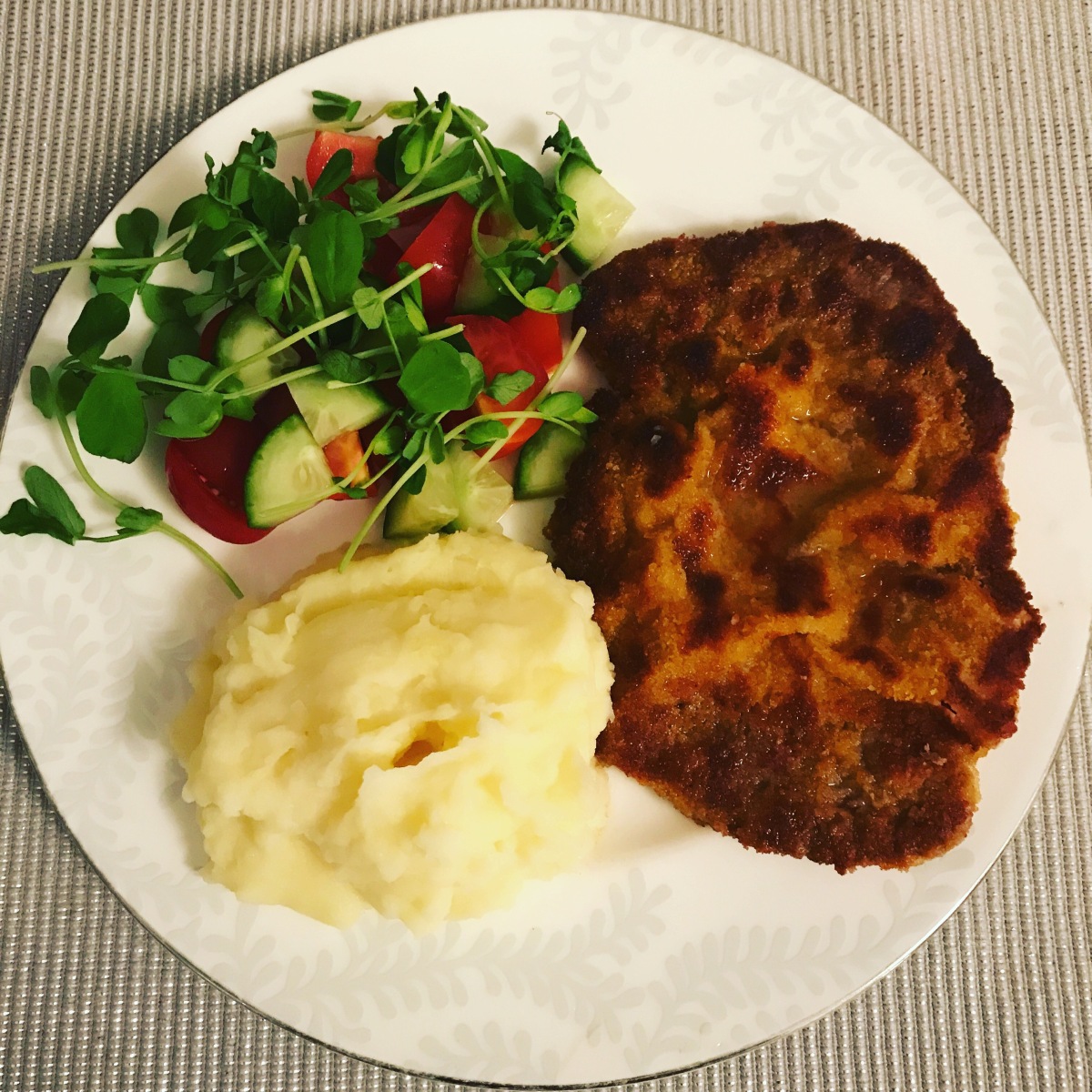
This dish, one of Austria’s national offerings, is one of my favourites. It’s a thin piece of breaded, pan fried steak, traditionally veal (however I use sirloin steak when cooking at home). The key is you will use a mallet to hammer the beef thin, which will keep the steak tender. The dish should be served with a slice of lemon, however I ran out of fresh lemons so I just drizzled some lemon juice on top.

sirloin steak
1 dl plain flour
1/2 tsp salt
1 tsp black pepper
1/2 tsp cayenne pepper
1 egg
2 dl breadcrumbs
butter
slices of lemon

1. Hammer the meat with a mallet until thin, 5-10mm. I tend to place the steak inside a freezer bag for this, to reduce mess. After this, it’s easy to cut the fat off.

2. Mix flour and the spices on a plate. Beat the egg, and place on another plate/ bowl. On a third plate, pour half of the breadcrumbs.

3. First, coat the steak with the flour / spice mix. Second, coat with the egg. When lifting the steak off, let excess egg drain back onto the plate. Third, place on the breadcrumbs, and pour the rest of the breadcrumbs on top. At each stage, make sure the steak is fully coated.

4. Let rest for 5 minutes on your chopping board.

5. Melt the butter in a frying pan, and fry the steak, 2 minutes each side.