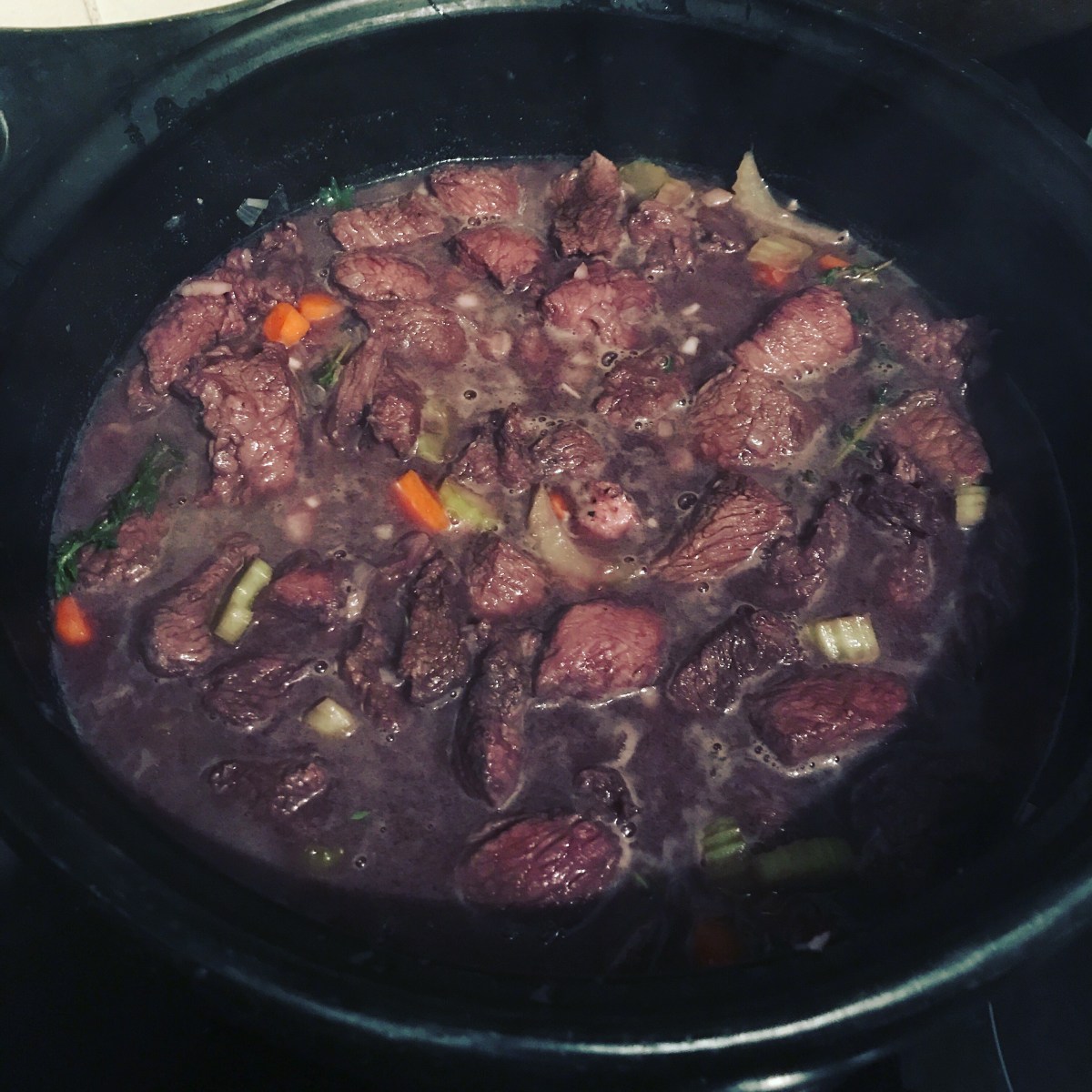
Braised ox cheek (or braising beef)

My recipe is originally for ox cheek, which are big pieces,  but as this isn’t something generally sold in supermarkets (and therefore requiring a trip to the butchers, which I unfortunately don’t often have time for), I think it also works with the beef braising steak, which I happened to have in my fridge this time. I do however have to honestly say that I prefer the cheek.   Both are parts of the animal that are tough and require slow cooking to make them melt-in-the-mouth soft. The cheeks in particular used to be more of a wasted part of the beef, but in the recent years upmarket restaurants have made it more fashionable. I would love to make this dish more often, as I love the braised ox cheek, but my husband doesn’t count braised meat as one of his favourites.

Ideal situation would be to marinade the meat for 24 hours, however if this isn’t possible I would go for minimum of two hours.

2 ox cheeks (or 750g beef braising steak)
300ml red wine
100ml port wine
1 small onion / 4 small shallots, finely chopped
1 stalk of celery, roughly chopped
1 carrot, roughly chopped
5 cloves of garlic, smashed and roughly chopped
6 stalks of fresh thyme
1 tbsp of black pepper (I tend to freshly crush whole peppercorns with pestle and mortar)
1 bay leaf

img_1423

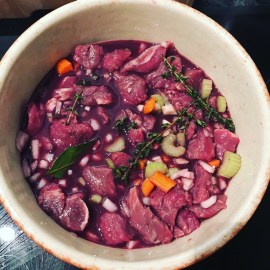
1. Place all ingredients in a bowl, and marinade for 24 hour if possible for best result, or minimum of 2 hours.
img_1422

2. Fry the meat pieces for few minutes, stirring, then add the other ingredients.

3. Simmer for 2.5 hours.

4. Once the meat is tender, remove from the liquid (mostly for ox cheek, difficult otherwise).

5. Strain liquid through fine sieve. You can also use a piece of muslin in the sieve for finer result. Boil the strained liquid in a clean pan until reduced to half.

6. Quickly fry the meat pieces and serve with the red wine glaze (if ox cheeks).
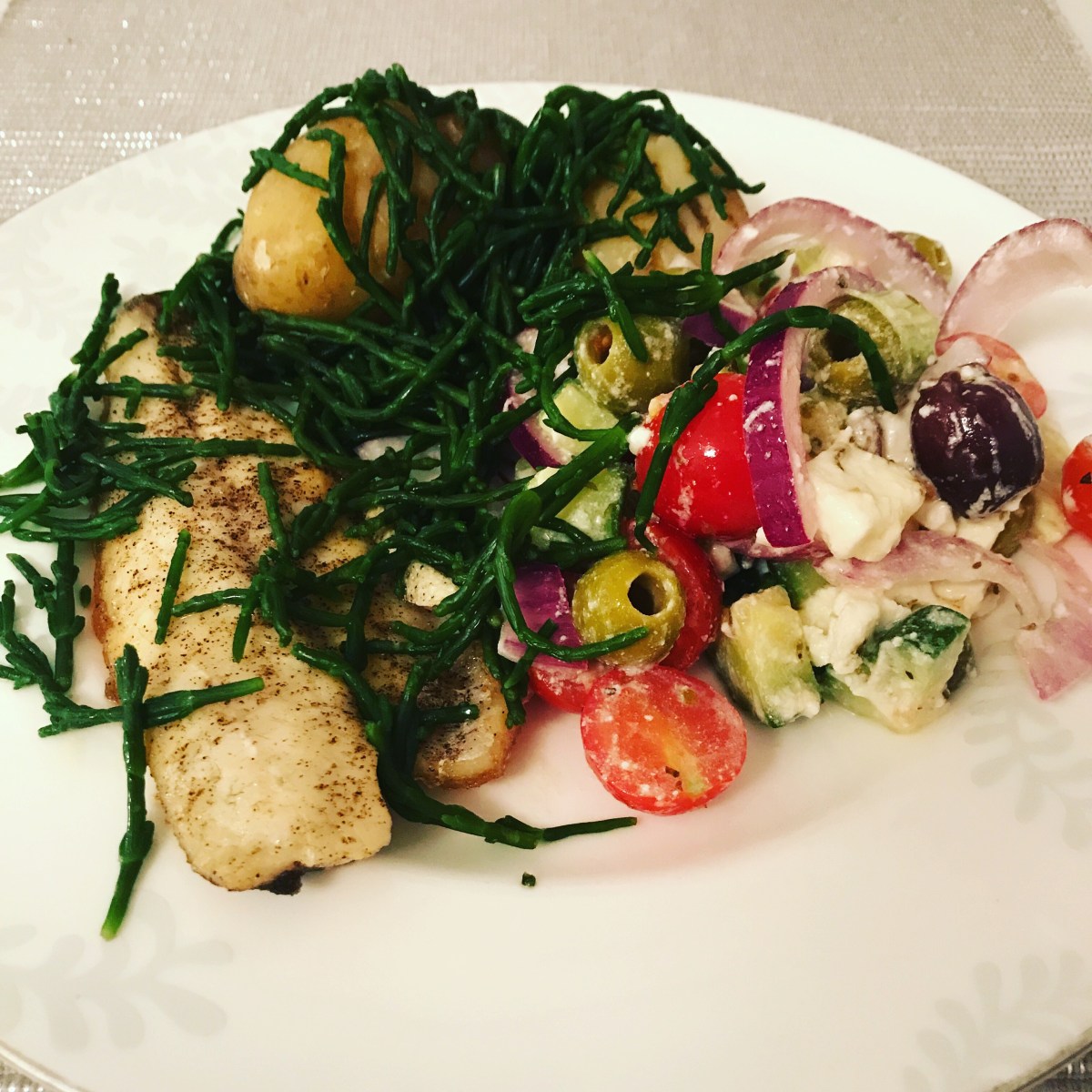
Sea bass with Greek salad

This simple, healthy meal is perfect for those evenings when you get home from work very late, and don’t really have that much energy for cooking, as it requires minimum amount of effort and cooking. Greek salad itself is very simple, with only a few ingredients, and there are many variations of this basic salad. You can always adjust it with additional ingredients to suit your taste. I served my dish with boiled baby potatoes and samphire. The below Greek salad recipe may be salty to some tastes, you can reduce the amount of feta and olives, or increase the amount of other ingredients to change the ratio of ingredients.

serves 2
2 sea bass fillets
splash of olive oil
salt
black pepper
~~~~~
2 leaves of romaine heart lettuce
few handfuls of cherry tomatoes
half a cucumber
red onion
200g feta cheese
200g olives
2 tbsp capers
1/2 dl olive oil
1-2 tbsp lemon juice
2 tsp white wine vinegar
2 tsp dried oregano

1. Cut the tomatoes, salad leaves, cucumber, feta, and onion, and add the olives and capers.

2. Mix the olive oil, lemon juice, vinegar and oregano together, and pour over the salad. Mix well, turning the ingredients so that all are coated with the oil mixture. Rest in the fridge whilst cooking the fish.

3. Heat a splash of olive oil in a pan, and place the fish in the pan, skin side down. Season the flesh with salt and pepper, and cook for 3-5 minutes, to crisp the skin up.

4. Place in a preheated oven 180°C / 355°F for about 7 minutes.

Salt crust baked crispy skin pork belly

I’ve had good pork belly with perfect crispy skin in restaurants, and I’ve also had not so good ones. I’ve tried to cook it myself unsuccessfully too, until now. You see, the crispy skin is an absolute must making this dish a fantastic one. If I have pork belly with a disappointing skin, I feel cheated. In the past, the prep of the pork has required scoring and spice rubbing of the skin, and then still ending up with either half cooked or too cooked skin that’s thick and tough. No more of this problem, since after my extensive research I decided to try salt crust baked method. It worked beautifully, and gave me the best pork belly I’ve ever cooked!

900g – 1kg piece of pork belly

Marinade
1 clove garlic
2-3 stalk of fresh thyme, leaves only
2 tbsp olive oil
pinch of salt
pinch of black pepper

Salt crust
1-2 dl table salt, depending on the size of the meat

1. Dry the piece of meat on all sides with a kitchen tissue. Mix the marinade ingredients together, and rub on the meat side only. Put in a container, skin side up. dry the skin again, cover and leave in a fridge for 2 hours (or longer).

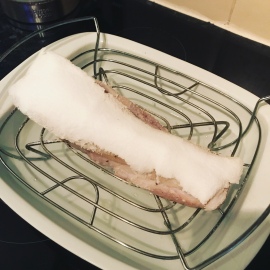
2. In a roasting tin, add about 1cm (half an inch) of water at the bottom. Place the pork on a rack. Pat dry the skin once more, and pour the salt on the skin. The salt will become a hard crust during cooking, and will be easy to remove later on. There is no need to score / slit the skin.

img_1388-1

3. Cook at 170°C / 340°F for 40 minutes.

4. Remove from the oven, and turn the heat up to 240°C / 465°F. Remove the salt crust. If any salt has fallen onto the meat on the sides, scrape off. Cook in the hot oven for further 30 minutes. You should end up with a perfectly crispy, golden colour skin and juicy meat.

5. Rest the meat for about 5-10 minutes, covered with foil.

Poached pear with vanilla and mascarpone mousse

I’ve not really used pears in cooking much, but was recently inspired to have a go. I spent a long time looking at various recipes, and in the end combined a few. This dessert is perfect for this time of the year, with winter spices of cardamom and cinnamon. After poaching the pears the red wine mixture gets reduced to syrupy wonderfulness. I also think vanilla is better used in the mascarpone mousse, rather that the red wine jus. It’s pretty simple to make, and I’m pleased I made this, as I’ll for sure be making this again.

4-6 pears
1 bottle (750ml) of red wine (I used Merlot)
3 cardamom pods, bruised (place knife flat on the pod, and hit with your hand)
1 cinnamon stick
200g caster sugar
1 lemon, grated zest and juice
~~~~~
1/2 dl caster sugar
~~~~~
250g mascarpone cheese
4 egg whites
1 tbsp caster sugar
1 vanilla pod

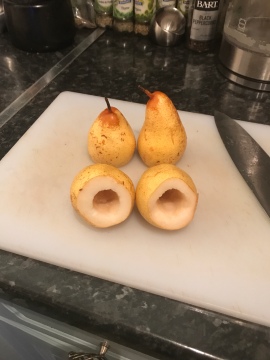
1. Peel the pears. Cut the bottoms off, and core them. (I forgot to peel them first, but it will be easier if you do it first).

img_1378

2. Put the prepared pears in a pot, together with the cinnamon, cardamom, lemon zest (save the juice for later), sugar and red wine. Bring to boil, and simmer, covered, for 20-30 minutes, until soft.

3. Remove the pears, and boil the liquid,  uncovered, to reduce. During the boiling add the lemon juice and 1 tbsp of sugar. Reduce at least until half the original volume, the more you reduce the more syrupy and thicker it will be.

4. Whisk the egg whites and sugar until stiff foam. Cut the vanilla pod lengthwise in half. With a sharp knife, remove the seeds from inside both halves. Mix the seeds thoroughly with the mascarpone cheese, and add the whisked egg whites, little by little, carefully folding  together with the mascarpone.

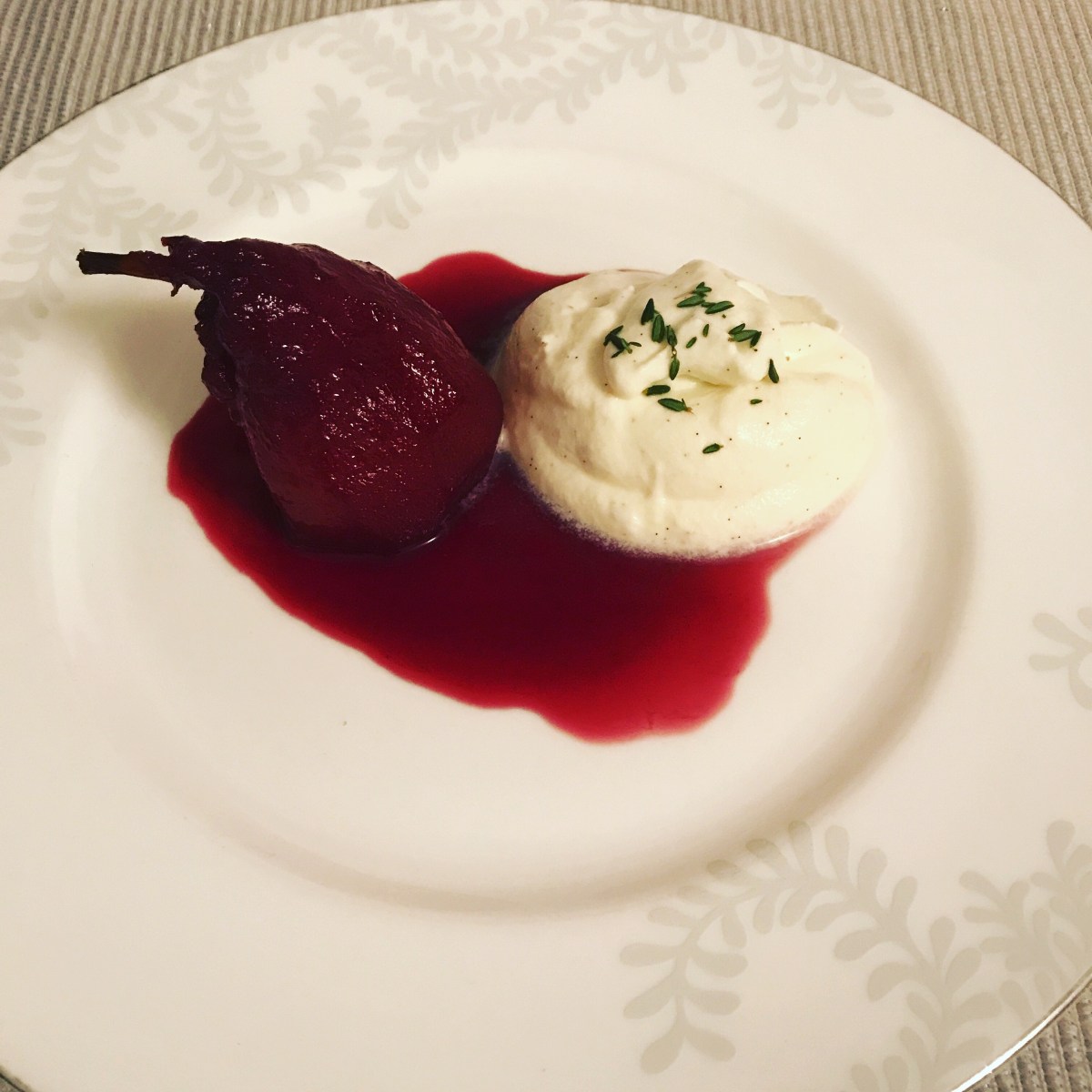
5. Pour the red wine reduction through a sieve. Put the pear and mousse on a plate or a bowl, and spoon some of the sauce over the pear.

Eggs Royale

I love eggs. Normally, my midweek breakfast include boring soft boiled eggs just because it’s quick. Weekends, however, are a completely different kettle of fish. That’s when you have to reward yourself for the long, hard working week, preferably with this luxurious and decadent breakfast of Eggs Royale. There are different variations to this dish, for example if you were to do it with ham instead of cold smoked salmon it would be called Eggs Benedict. The only cooking you need to do is poach the eggs, and make the Béarnaise sauce. The latter may not be the easiest of tasks if you’ve not made it before, however I hope by following my instructions yours will be perfect!

serves 2

Béarnaise sauce
2 tbsp finely chopped onion
5 freshly ground white peppers, or 3 shakes of ground white pepper
2 parsley stalks
2 tarragon stalks
2 tbsp white wine vinegar
2 tbsp water
100g butter
2 egg yolks
1-2 stalks of tarragon, leaves only, finely chopped

1. Put the onion, pepper, parsley, tarragon, vinegar and water in a pan. Let boil until the liquid has reduced to about half. Strain the liquid.

2. Melt the butter.

3. Put the egg yolks in a bowl, and drizzle over the strained liquid.

4. The eggs will need to be cooked in a bain marie (hot water bath). This is actually not as complicated as it sounds, please don’t let that deter you from making this sauce! You need a pot with water at the bottom, which will be heated to boiling. It’s important that the bottom of the bowl with the eggs doesn’t touch the hot water, as this could result to your sauce splitting. Start adding the melted butter to the eggs in drops at first, mixing/whisking as you go, then slowly drizzling the rest. You need to keep mixing the sauce until thickened.

img_1025

5. Add the finely chopped tarragon leaves.

Poached eggs

1 tbsp vinegar

couple of pinches of salt

All you need to poach eggs successfully are spacious enough pan, spoon for stirring boiling water, slotted spoon for removing the egg from the water, a bowl for the cooked eggs to let excess water drain out. I tend to break the egg into a cup, to have one ready to be cooked as soon as one comes out of the boiling water.

1. Put vinegar and salt in the pan, pour water and bring to boil. Stir in the centre with a spoon, and immediately pour egg into the eye in the center. This, together with the vinegar and salt will hold the egg together.

img_1026

2. Cook for 3 minutes, and remove from the water with a slotted spoon. I tend to put the egg in a bowl first, to drain excess water, before plating it, otherwise you’ll end up with a soggy plate of food!

Glögi (mulled wine)

When you live in your native country, you take it for granted that you can just pop in to a shop and get whatever delicacies you happen to fancy. If you have however settled abroad like me, you’ll have to learn to make things yourself. I know you can also buy mulled wine mixtures in the UK, however, since I created my recipe, I never felt the need to try them. Every year, I end up making a few batches of this, as you can’t stop having it once it’s ready! Also, it’s actually really easy to make.

1 1/2 liters water
1/2 liter apple and blackcurrant squash
1 liter blueberry juice
6 thumb size pieces of fresh root ginger, roughly chopped
6 cinnamon sticks
6 tbsp cardamom pods
2 tbsp whole cloves
1 orange, grated peel and juice
2-3 whole star anise

1. Put all ingredients together in a large pan, and bring to a boil. Simmer, covered, for an hour, and pour through a sieve, then bottle.

img_1368

2. When serving, I tend to fill 1/4 or 1/3 of the cup with red wine, and fill the rest of the cup with the spice mixture.

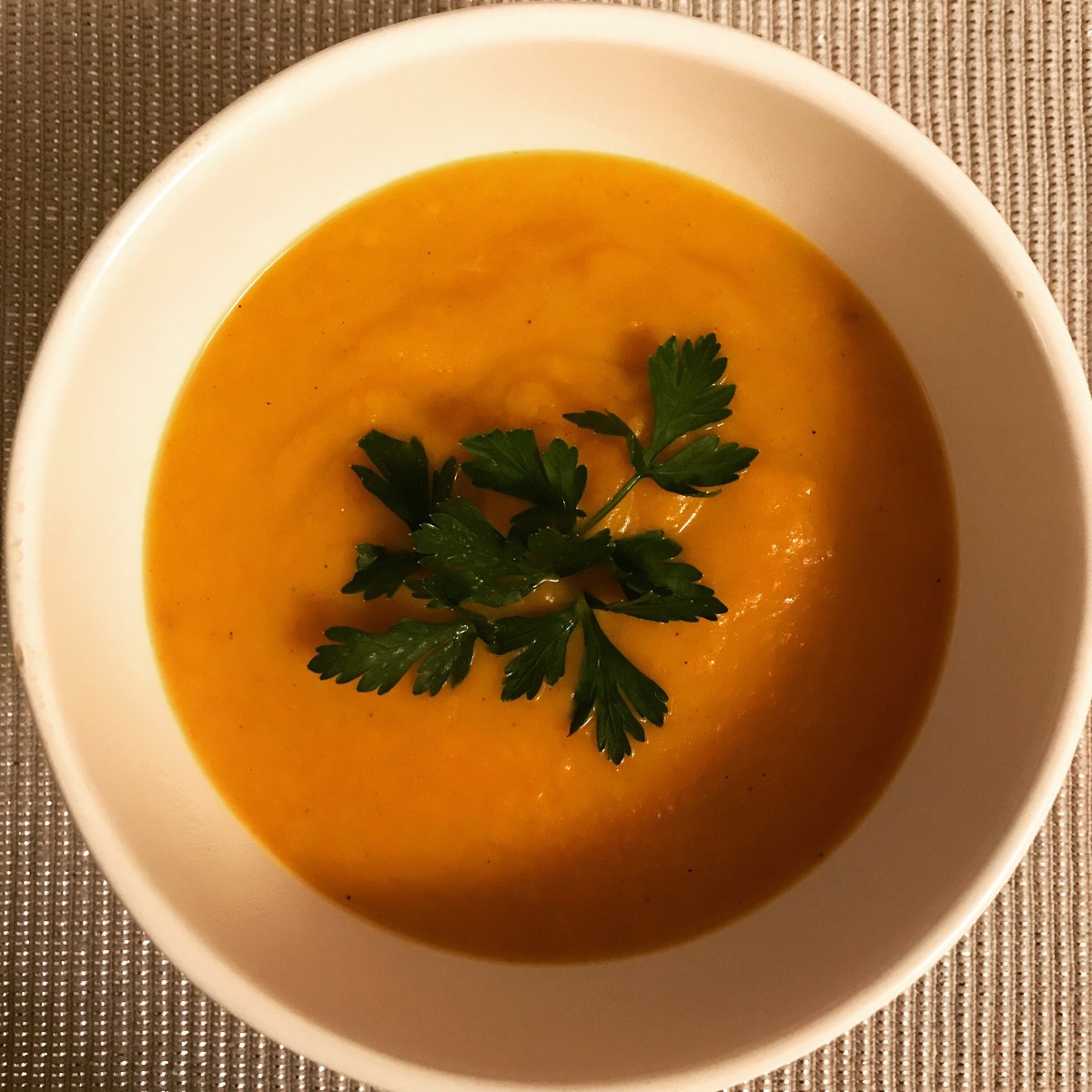
Spicy ginger and carrot soup

When I heard this combination mentioned recently I thought it makes sense. I also thought it sounds like something that could benefit from a bit of heat from a chilli, as well as the usual suspects onion and garlic. And I always tend to add potatoes to pureed soups, for that rich, smooth texture. I have just been experimental and  thrown ingredients together for this soup, however I do think the ginger, sweet carrot and spicy chilli make a good team. And did you know that ginger, chilli, garlic, onion and turmeric are all natural medicines to fight off those colds too, so perfect for boosting your immune system when the weather is getting cold outside.

4-5 medium-large potatoes (900g), peeled and cut into pieces
1 kg carrots, peeled and cut into pieces
100g fresh root ginger, peeled and chopped
2 garclic cloves, peeled and chopped
2 medium onions (I used red onions)
1 small green chilli (the smaller the variety, the hotter it will be), chopped
3 tbsp olive oil
1 tsp cumin powder
2 tsp turmeric (optional)
1 liter water
1/2 dl cream
salt and black pepper

1. Roughly chop onions. Heat the olive oil in a pan, and fry onion in medium heat for 5 minutes.

img_1358

2. Add the ginger, garlic and chilli, and fry for few minutes. Add turmeric and cumin, and fry until fragrant.

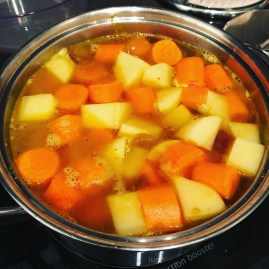
3. Add the carrots and potatoes, as well as water. Bring to boil, and cook, covered, for 45 minutes, or until carrots and potatoes are soft.

img_1357

4. Let cool slightly, and puree in a blender.

5. Add cream, and depending on thickness, a splash of water. Season with salt and pepper.

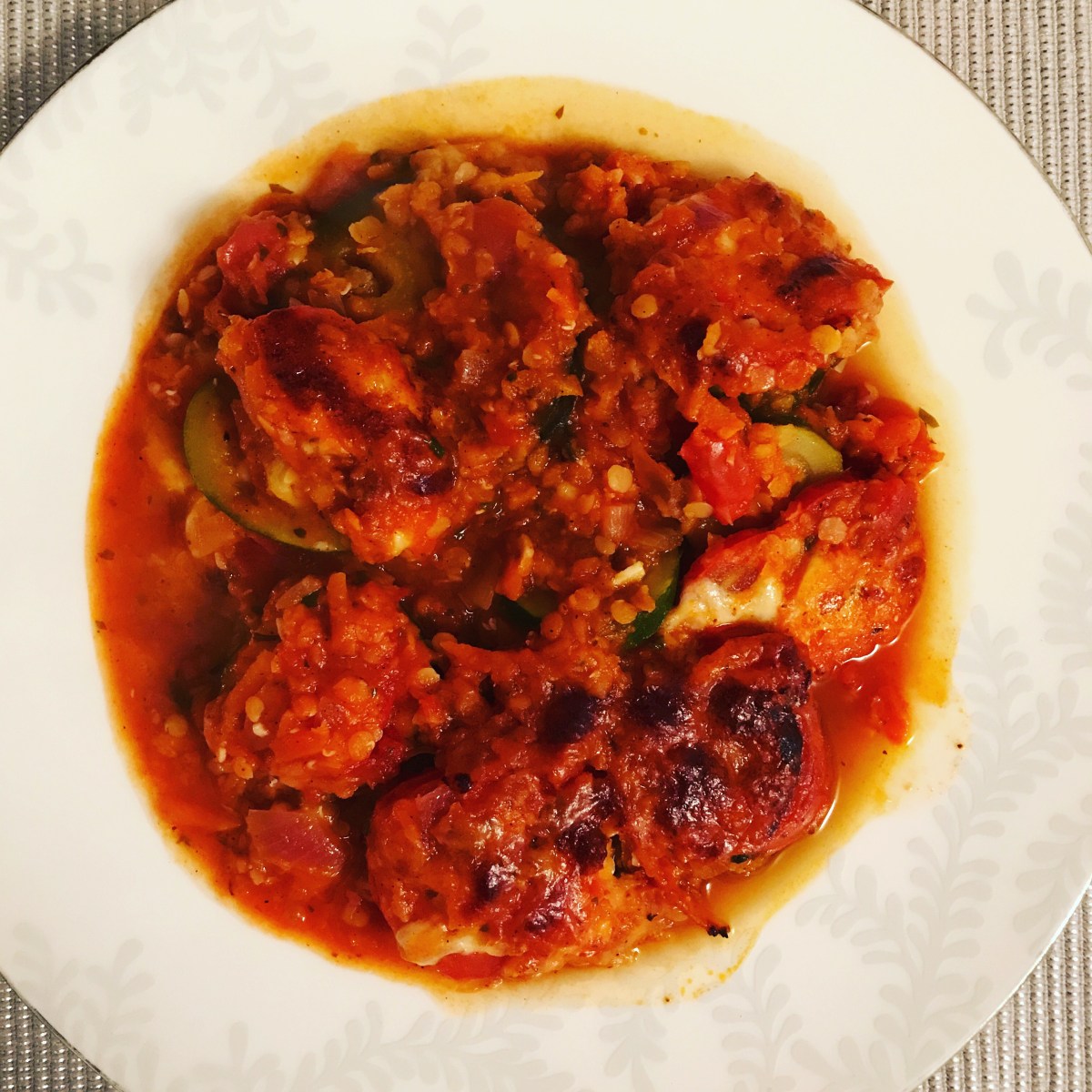
Vegetarian bake

This tasty vegetarian bake is a dish I learnt from my friend years ago, when we lived together as single ladies. Even though I’m more of a carnivore, this dish has stuck with me, and is something I make regularly, as it’s really flavoursome.

2 dl red lentils
1 onion
3 garlic cloves
1 carrot, peeled and grated
2 tins of chopped tomatoes
2 tbsp tomato puree
3dl vegetable stock
handful of fresh basil
3 tbsp olive oil
1 tsp salt
1 tsp ground black pepper
1 tbsp dried oregano
1-2 aubergines (eggplants)
4 large tomatoes
2 courgettes (zucchinis)
1-2 balls of mozzarella
grated parmesan cheese

1. Rinse the lentils, and drain in a sieve. Place in a saucepan, and cover with water. Bring to boil, and simmer for 15 minutes. Drain.

2. Finely chop onion and garlic, and fry in oil for 5 minutes. Add the carrot, chopped tomatoes, tomato puree, basil, stock, salt, pepper and oregano. Cook, stirring, for 5 minutes. Finally, add the cooked lentils.

img_1321

3. Slice the aubergines, courgettes, tomatoes and mozzarella.

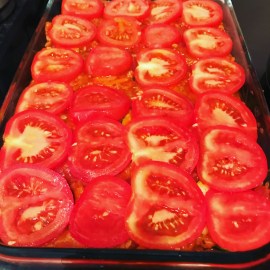
4. Layer in an oven dish. I tend to put a little bit of the sauce mixture at the bottom, as well as in between each layer, and also on top.

img_1324

5. Sprinkle parmesan cheese on top and cook in preheated oven 200°C / 390°F for 40 minutes.

Hake with scallop, brown shrimp and samphire

When I planned for this dish, I didn’t have anything in particular in mind. I chose hake because I try to alternate fish I use. I normally use smoked hake and make the same dish with it, so it was perfect time to experiment with unsmoked and cook it like I would normally cook cod, pan fried. For the accompaniment, I was just browsing throught the seafood section (I do my food shopping online and have it delivered, to save my precious time after work), and when I saw the small scallops and brown shrimps they sang out to me, wanting to be part of this dish. My husband would like me to get samphire more often than I do, so I decided to get that too. This recipe makes big portions, so you could probably also make this for 3, maybe even 4 people. I had some leftover puy lentils and quinoa, so I served the fish with that.

serves 2
400g fillet of unsmoked hake, cut in two pieces
70g brown shrimp
180g small scallops
90g samphire, washed
2 shallots
50g butter
1 tbsp lemon juice
1 dl frozen peas
1/2 dl cream
salt
white pepper

1. Melt the butter in a frying pan, and add the hake fillet pieces. Season both sides with a little bit of salt and pepper, and fry for about 3-4 minutes on each side. Move to a plate and cover with foil to keep warm.

2. Add finely chopped shallots to the same pan, fry for a minute or two, and add the scallops and lemon juice. Fry for few minutes, stirring.

img_1343

3. Add the peas, followed by samphire and shrimp. Season with a dash of pepper. You probably won’t need much salt, as the samphire itself is quite salty. Fry, stirring, for couple of minutes,  until all ingredients are warmed through.

img_1344

4. Add the cream, and warm through.

Pheasant breast and confit leg

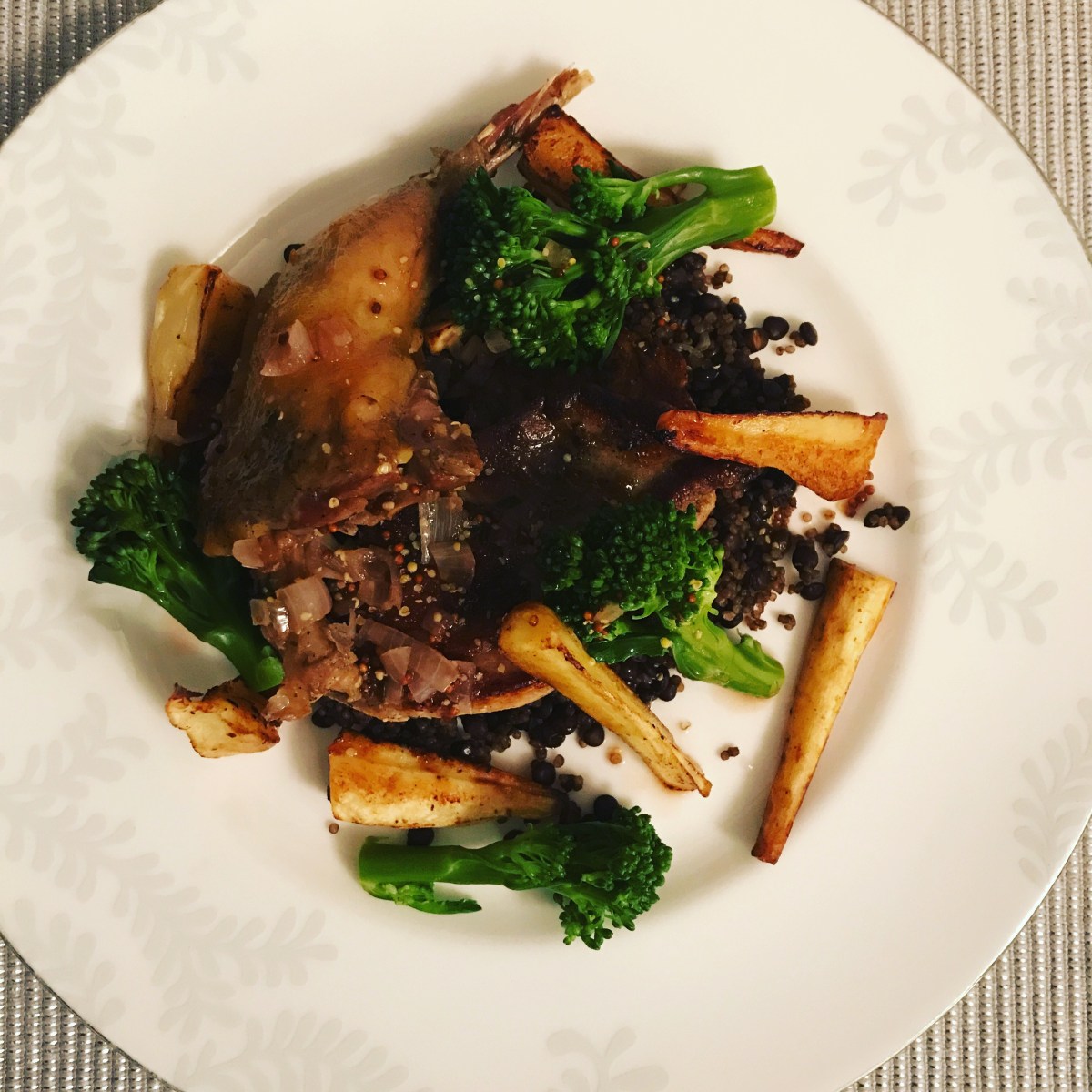
I was practicing my butchery skills with this dish, as I bought the whole bird, but if you don’t want to get your hands messy you can buy these ready prepared. There are a couple of things to keep in mind when cooking wild game: it is very lean meat, so care should be taken not to overcook it, as it will get tough otherwise. Also, it’s good to remember that the meat might contain a pellet or two on occasion. I served my pheasant with puy lentils and quinoa, roasted parsnips and steamed tenderstem broccoli.

Confit leg
sea salt
ground black pepper
thyme leaves
2 dl vegetable oil
2 dl duck fat
2 garlic cloves

Breast
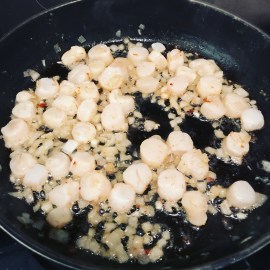
1 garlic clove, finely chopped
1 tbsp olive oil
pinch of salt
ground black pepper
thyme leaves

Sauce
2 shallots
1 thyme stalk
1 dl port wine
1 tbsp sherry vinegar
1 dl chicken stock
1 tbsp grainy mustard
salt
black pepper

1. Rub some sea salt, ground black pepper and thyme leaves on the legs. Cover with cling film, and rest in the fridge for 1-2 hours.

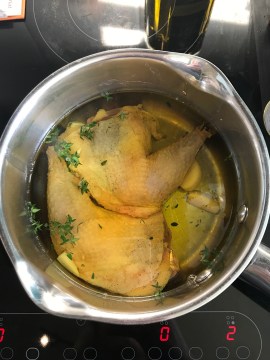
2. Wash the salt rub off the legs, and pat dry the them. Heat the oil – fat mixture to very low temperature,  including garlic cloves and thyme stalk. Place the legs in the oil, and cook on very low heat for 3 hours. Make sure you have enough oil/fat to cover the meat.

img_1316

3. Whilst the legs are cooking, marinate the breast, cover and place in the fridge for couple of hours.

4. Finely chop shallots, and fry in olive oil together with the thyme stalk until shallots are translucent. Add port, sherry vinegar and stock, and reduce by boiling uncovered until desired thickness. Add grainy mustard, check the taste and add salt and pepper if needed.

5. Pan fry the breasts for 1 minute, skin side down. Turn skin side up, and place in preheated oven 200°C / 390°F for 10 minutes.