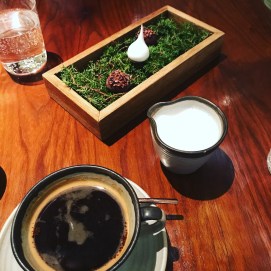
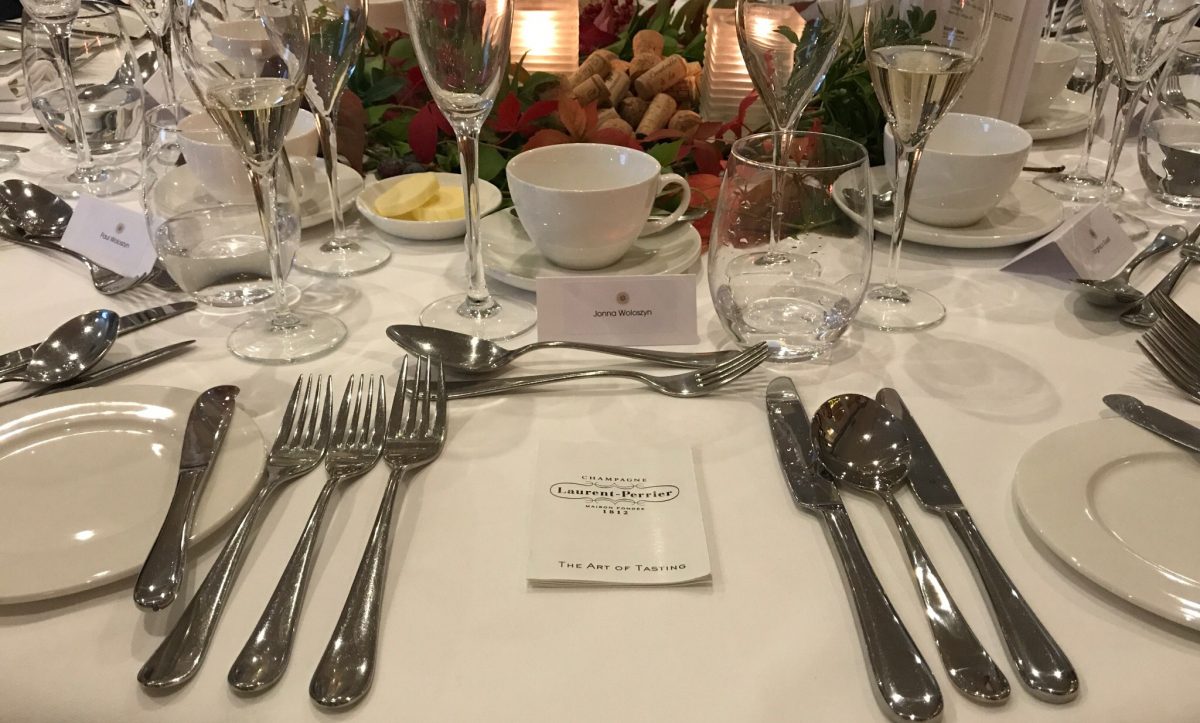
Restaurant review: Roganic, London

When my husband and I heard Simon Rogan had left Fera to go and add another restaurant to his growing empire, we were excited to go and see his new place. This Michelin starred chef (who needs to split his time between a few high level restaurants) has appointed Oliver Marlow, for sure a future star in the foodie scene, as his Head Chef. Oliver has an impressive background of very high level restaurants, from Eleven Madison Park in New York and Maaemo in Oslo, to Fat Duck in Bray and now Roganic. He was also part of the crew of Roganic pop-up restaurant.

We went to Roganic after one week of opening. The atmosphere as soon as you step in is welcoming and relaxed, and the decor reflects this, being very minimalistic and bare. The staff were very friendly. The General Manager was a character, in a positive way, which we liked. I can already see some Michelin stars in the horizon for this place as soon as the next ones are given. Those who are familiar with my restaurant reviews know that I don’t give the top five stars easily at all and only reserve them to the best (in fact I’ve not yet given any), and even four is not given to all nice restaurants. I think Roganic is so good that I’ve been contemplating between four and five stars. See the end to find out what I decided in the end.

We decided to go for the full Tasting Menu experience with wine pairing.

First we had an appetiser of raspberry tart with beetroot and buttermilk. First taste was sweetness from the raspberry, after that the earthiness of the beetroot. The tart pastry was very light, thin and crispy.

Second came a trio of appetisers.

The seaweed custard with caviar was absolutely devine. It actually reminded me of a food from my background, a kind of salmon meatloaf, but with a nicer texture and even nicer flavour. It didn’t seem to have any fish, so the fishy flavour must’ve all come from the seaweed.

The pork, eel and hay cream ball, again was absolutely delicious. My husband said the flavour reminded him of smoky bacon crisps (potato chips), and after he said it I could taste it too. Both the texture and taste were just simply wonderful.

The raw mackerel with lovage in pickled kohlrabi had nice, charred smoky flavour to it.
Next came scallop with gooseberry, apple and oyster. It was nice and fresh, however I do find raw scallop usually very mild in flavour. All the flavours went very well together.
Once the bread came it was time for the usual butter test. We were delighted that Roganic passed this test with flying colours. Both the bread and the butter are made in-house. The bread was one of the best, most flavoursome sourdough I’ve ever had, and butter was extremely fluffy and soft, almost mousse-like, simply perfect.

First warm dish was artichoke broth with smoked yolk and winter leaves. This was really good, very flavoursome. The yolk was perfectly gooey, the thicker kind you get when slow cooked. Beforehand, I had reservations about the broth, but it was in fact top notch.

Next up was salt baked celeriac with enoki and whey. This was very nice. I often find celeriac very bland and tasteless, but miraculously Simon and his team have managed to bring out the celeriac flavour. I also thought the crispy enoki brought great texture as well as subtle mushroom flavour, which all worked very well together with all the other ingredients. The whole dish had lovely earthiness to it.
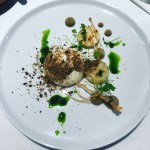
The next course of millet pudding with stichelton, pear and bone marrow was a dish that ‘grew on you’ as you were eating it. And when you remembered that the caramelised pear was at the bottom of the bowl, and tasted all elements together, it all all of a sudden made sense. The wine pairing for this was also perfect.

For the fish dish we had butter poached halibut with brassicas and tarragon. The fish was very well cooked, soft and juicy. I was slightly nervous about the tarragon sauce as it can be an overpowering herb, but I should’ve remembered where I was and not be nervous. The sauce complimented the halibut very well. It was only at this stage that we were able to think of any, first bit of criticism, for something being somewhat too salty. We thought it might have been the brassicas.

For the meat we had duck. The dish was served on three separate plates, and I would say was quite generous. The breast was cooked really well, pink as it should be. The skin also had crispiness to it. In many places the skin isn’t crispy, and I think it absolutely must be. Heart was served with cheese ‘mousse’, which was superbly tasty, almost like a garlicky flavour. I loved this. The leg meat was served cold, and again was very tasty. We found it a little bit awkward to eat from the three different plates, but in terms of flavour it was all very good.

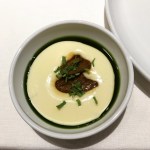
Next we had a palate cleanser of yellow beetroot sorbet with mint oil, buttermilk and oxalis. The taste was earthy, but fresh at the same time. Sorbets are often either quite sharp or sweet, this was neither, but earthy instead. A very nice dish.

For the first dessert we had burnt milk crisp with blackcurrant and yoghurt. This was very good, I loved the burnt milk crisp. Everything worked well together.
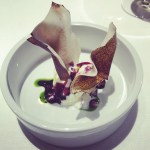
The dessert of caramelised apple was an absolute triumph. I’m not usually one to pick apple dessert, and I thought this was fantastic. The apple was cut in thin layers, then rolled together, and was wonderfully caramelised and sweet. Also the pastry at the bottom was light and delightful. The sour milk ice-cream had a very interesting flavour of fir.

For Petit Fours we were served juniper fudge, rhubarb jelly and dandelion seed snap. The fudge had a very interesting flavour from the juniper. The rhubarb was nice, and the dandelion seed snap had an interesting, earthy flavour, which my husband loved.
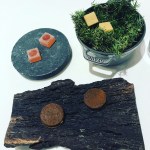
Finally, as we were leaving, we were given a little ‘gift’ of a mini brioche loaf, orange marmalade and two tea bags, for next morning. What a wonderful way to make the experience last even longer.

Rating: ★★★★★

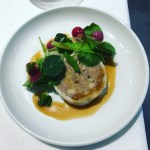
Sea bream with mango and crab salad

This plate of food is like sunshine on a plate. It’s so fresh and colourful, and all the flavours just simply work really well. Even though raw garlic and chilli are used, when eating this you don’t notice it. It’s also a quick dish to make.

1 mango

1 avocado

2 large red chillies (mild, or to your liking), finely chopped

1 clove of garlic, finely chopped

3 spring onions, chopped into thin slices

100g cooked white crab meat

100g king prawns (I tend to use raw and cook them myself, but cooked are ok too)

1 lime (juice)

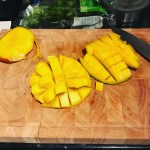
1. Cut the mango and avocado into cubes.

2. Add finely chopped garlic and chilli (deseeded). Add all the other salad ingredients.

3. I usually use raw prawns so I put the mixed salad into fridge, and pan-fry the prawns. I then let them cool, while cooking the fish (pan-fry for about 5 minutes, then finish under a grill in the oven for another 5 minutes). Then mix the prawns into the salad, and serve with the fish.

Perfect roast potatoes

Preparing potatoes this way was very unfamiliar way to me when I moved to UK. On the Finnish dining table they are mostly consumed as either plain boiled, or as creamed garlic potato bake (another one of my favourites). First, I didn’t even care about them cooked this way. Then, I started trying to make my own, and realised how difficult it actually is to get them perfect: crispy on the outside and fluffy on the inside. Even with my recipe below, they didn’t always turn out that well. To perfect my roast potatoes has really taken effort through trial and error, but finally it has paid off.

A big tip that helped me, was that when using duck / goose fat, you need to mix it with vegetable / olive oil. Otherwise your potatoes won’t get so crispy. The other key things are that once you’ve boiled your potatoes, cool them completely. I tend to boil my potatoes first thing in the morning, and then they’ll have plenty of time to cool before the other stage. Also, you need to turn them every 20 minutes or so, it’s the hot fat that crisps them up. Also, you need to heat the fat in the oven before adding the potatoes.

large potatoes
garlic cloves, bashed
rosemary sprigs
olive oil
duck or goose fat
salt

1. Peel the potatoes, and cut into halves or quarters, depending on size. Wash the pieces under running water for 5 minutes, to wash off the starch.

2. Place the potatoes in a pan together with the garlic and rosemary. Cover with water, bring to boil and cook until very soft (covered with a lid).

3. Drain the cooked potatoes, and let cool.

4. Heat oven to 180°C / 350°F.

5. Put about 5mm layer of oil and dollops of the duck or goose fat at the bottom of a roasting tray. Heat the oil / fat in the oven for 15 minutes.

6. Add the potatoes to the hot oil, and cook them for at least 1 hour and 20 minutes. Turn the potatoes every 20 minutes.


7. Drain cooked potatoes on kitchen tissue, and sprinkle with salt.

Yorkshire pudding

To me, the Yorkshire puddings are a delight of British cuisine. A roast dinner isn’t complete without one or two. Funnily, there was a debate at my husband’s office, where all participants were British, whether Yorkshire puddings should or should not be part of a Christmas meal. From an outsider’s view, Christmas meal, too, is a roast dinner, and it’s therefore crucial that it’s included.

2 large eggs
equal quantity of milk to eggs
pinch of salt
equal quantity of plain flour to eggs
vegetable oil / lard

1. Whisk the eggs, milk and salt together, and let stand for 10 minutes.

2. Add the flour, and let rest for at least 30 minutes.

3. Heat oven to 210°C / 410°F. Place the oil or lard in tins and heat in the oven for 5 minutes.


4. Give the batter another good whisk, adding 1 tbsp of cold water. Fill 1/3 tins, and bake for 15-20 minutes.


Chicken fajitas

I may be known for my fine dining hobby, but sometimes you just want that honest food that may be messy to eat. For my fajitas, I tend to make make everything apart from the tortillas from scratch. This Mexican food is enjoyed across the world, and making everything by yourself allows you to adjust the spicing to your liking. The tortillas are usually eaten with a selection of fried meat, fried peppers and onions, tomato salsa, guacamole, creme fraiché and cheese. I tend to leave the cheese out, and just to make things easier, fry the meat together with the pepper and onion. In my blog I have individual posts for my guacamole and salsa, so I won’t write them again on here, but I’ll include links for them. This is great comfort food for those cosy evenings in.

Tomato salsa
Homemade guacamole
crème fraiche
~~~~~
500g chicken breasts
2 peppers
2 onions
2 cloves of garlic
1 small green chilli
2 tsp cumin powder
1/2 tsp black pepper
1/2 tsp salt
splash of vegetable oil

1. Finely chop the chilli and garlic. Slice the peppers and onions, and set aside.

2. Cut the chicken breasts into strips. Fry in the oil, adding the cumin, salt and pepper. Once just about cooked through, add the other ingredients. Fry until onions are cooked.

Tomato salsa

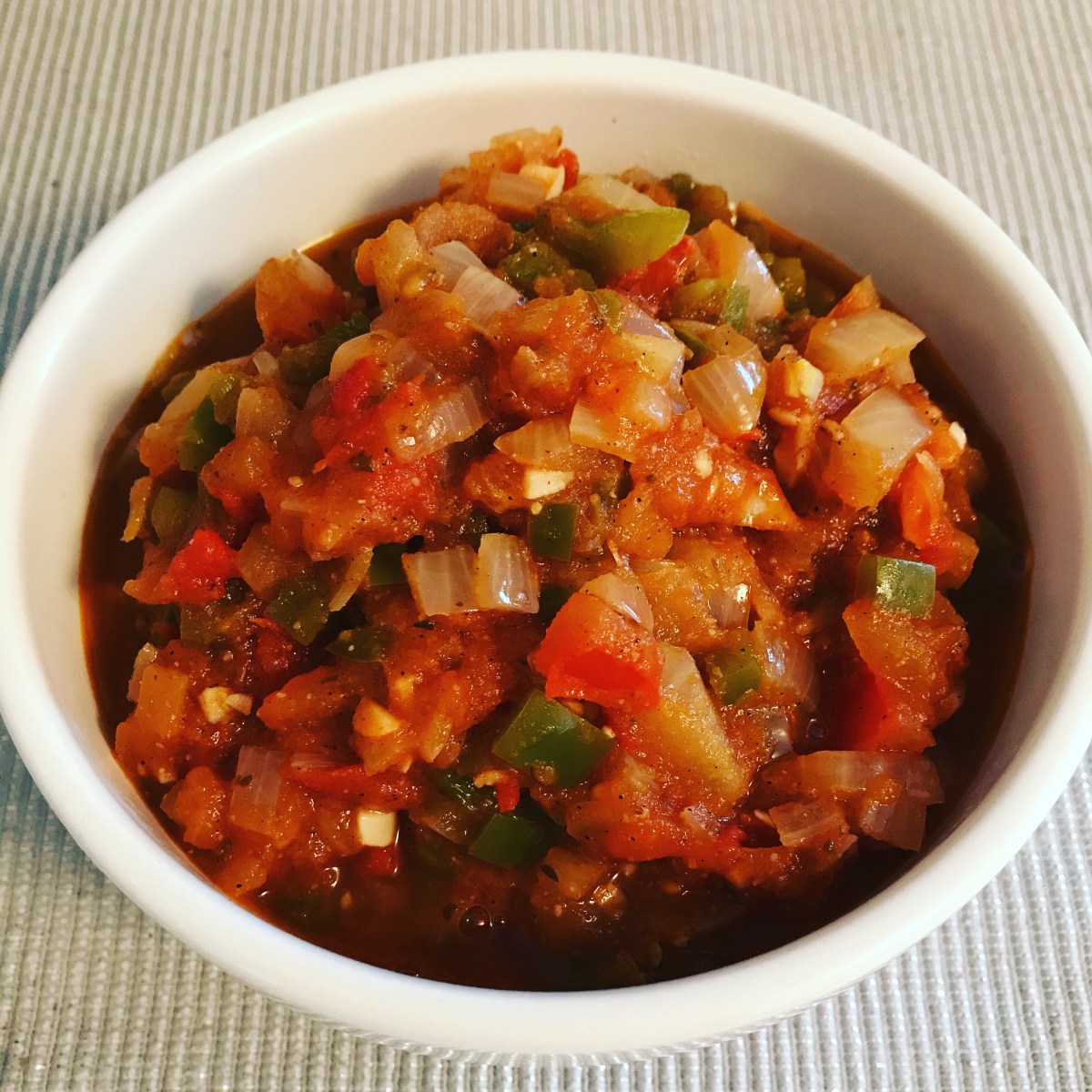
This basic salsa can be eaten hot or cold, and is perfect as a dip with some tortilla chips or as one of the fillings for fajitas.

Tomato salsa
3-4 large tomatoes
2 onions
1 green pepper
1 small (hot) green chilli
3 cloves of garlic
2 tbsp tomato purée
2 tbsp lemon juice (1 lemon)
2 tsp cumin powder
1 tbsp caster sugar
1/2 tsp salt
1/2 tsp black pepper
1 tbsp dried oregano
1 tbsp vegetable oil

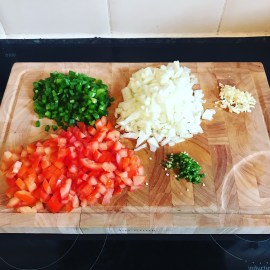
1. Finely chop the garlic and chilli. I also use the seeds from the chilli. Chop the onion, pepper and tomatoes into small pieces.

2. Place all the chopped ingredients in a pan with the vegetable oil, and add all the spices / herbs. Fry for about 10-15 minutes, stirring occasionally.

3. Add the tomato paste and and the lemon juice, and mix in with the other ingredients.

The salsa is ready to be eaten immediately, or you can cool it to use it as a dip.

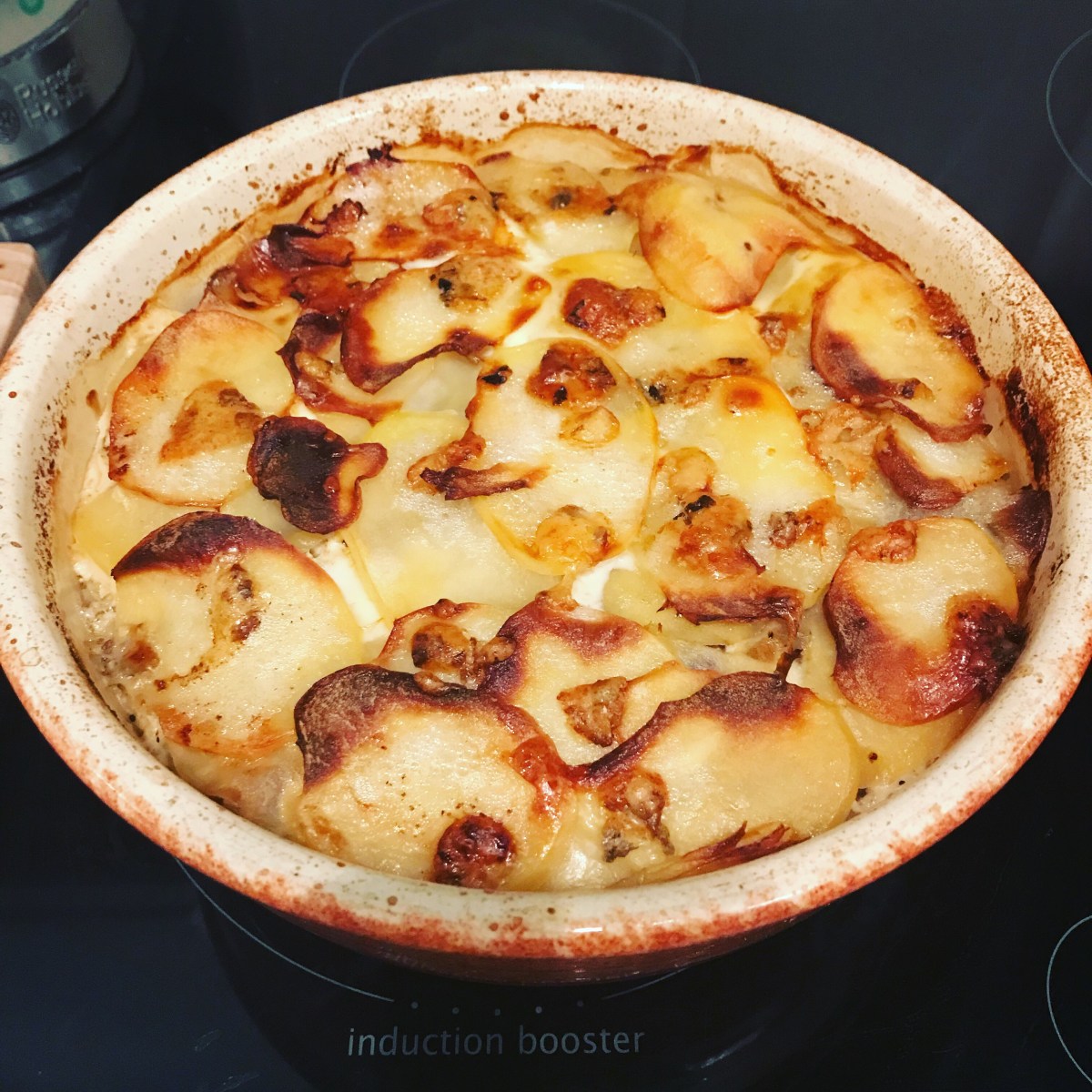
Mince beef and potato bake

This is simple home cooking. Easy and quick (in preparation), and will be enough to take as lunch to work too. Now, I spent a great while trying to think what to call this dish. I couldn’t really come to any good definitive conclusion of what would be best, most describing name. I’m happy for anyone to give me suggestions on this. My mum used to make this when I was a child. She would always make two version: one with blue cheese for adults, and one without for the children (I’m the second oldest of five). These days, I always make mine with the blue cheese, but this can easily be left out if you’re not a fan.

2 onions
500g mince beef
6 medium to large potatoes
50g blue cheese (I used Roquefort)
5 dl milk
3 eggs
salt and  black pepper
ground allspice, white pepper, paprika (optional)

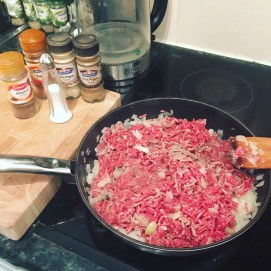
1. Finely chop the onions, and fry in vegetable oil in a pan until they start to get translucent. Add the beef and mix with the onions. add spices of your liking. I tend to always use salt, black pepper, white pepper, allspice and paprika on my basic mince beef for various different foods. Cook until the beef is ready, breaking it into small bits as it’s cooking.

img_1975

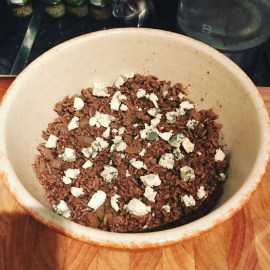
2. Peel and slice the potatoes. Layer about a third of them at the bottom of an oven dish. Then put half of the mince beef as the next layer. If using blue cheese, add half of it on next. Then a layer of half of the remaining potatoes, remaining mince beef and remaining potatoes on top.

img_1972

3. Mix the eggs and milk with a fork, then pour over the potatoes / mince beef. If using blue cheese, add the remaining half on top.

img_1970

4. Cook in preheated oven 180°C / 355° F for about an hour, until the potatoes are soft.

img_1971

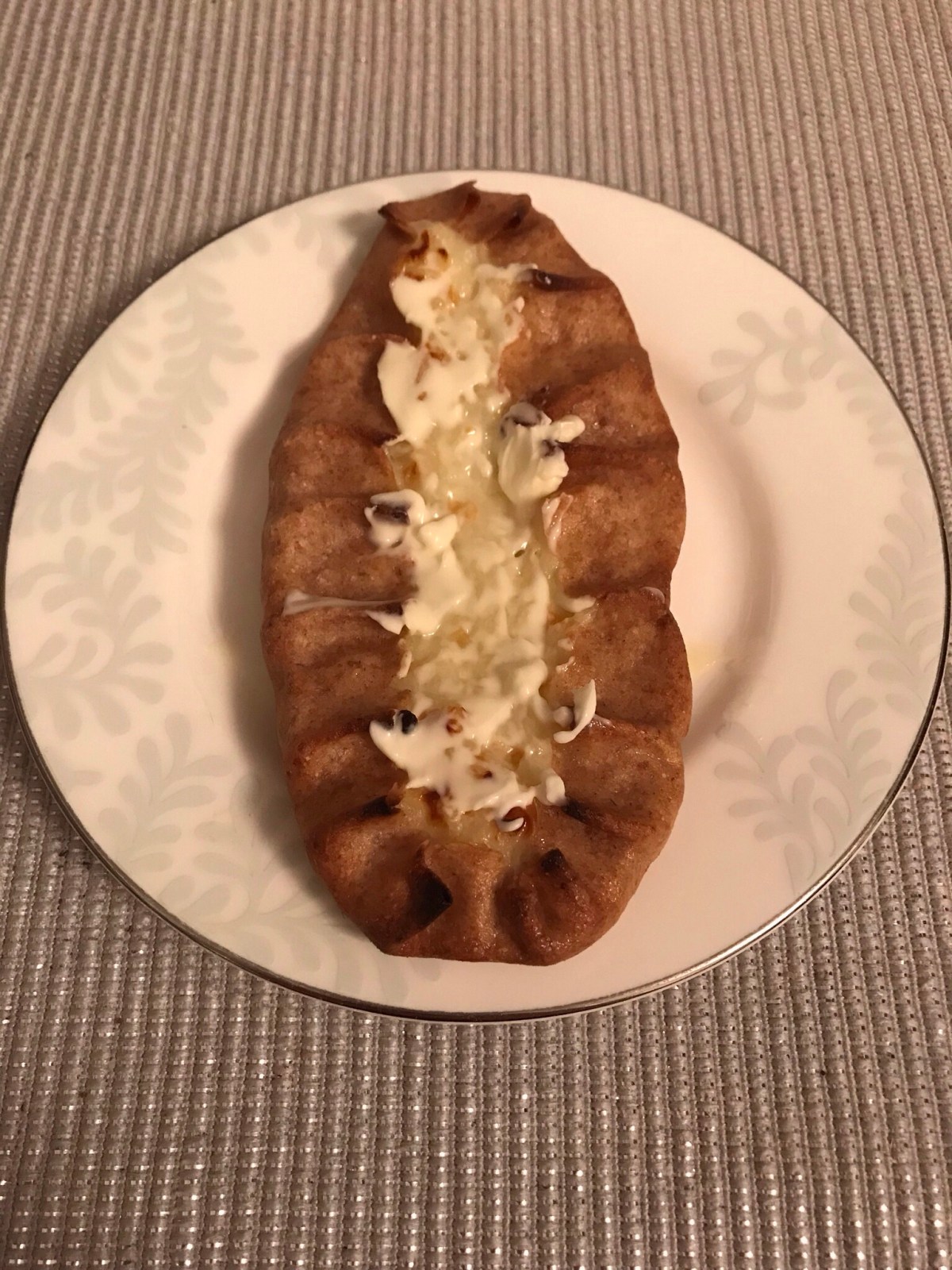
Karelian pie (not really a pie)

This Finnish “pie” is one of those foods I’ve had to learn how to make myself because of living abroad, to ensure availability when I would like some. It’s right up there with one of my all time favourites, salmon soup. These days, only the pies from the actual Karelia area can officially be called as Karelian pies, but to me they are all called this. When Gordon Ramsay tasted it and thought it was awful, he must’ve hurt every Finnish person’s feelings. To be honest, I do have to wonder if his comment was for the sake of the cameras. Everyone must’ve been thinking what version of this food was he served, as I don’t know anyone who doesn’t like Karelian pies.

Even though the name says ‘pie’, it’s not really one. I was trying to think how to translate it (with the help from my British husband), but nothing seemed to fit. We went through pasty, pie, pastry etc and concluded that pie was still the best option.

Basically, this pie is something with very thin rye (and wheat) flour dough base, with cooked, savoury pudding rice in the centre. Very often, it’s enjoyed with butter that has hard boiled, crushed egg mixed in.

Filling
3 dl pudding rice
3 dl water
12 dl milk
2 tsp salt
Dough
4 1/2 dl rye flour
1 dl plain wheat flour
2 tsp salt
2 dl cold water

1. Put the rice, salt and water in a pan. Cook until the rice has absorbed all the water. Add the milk, and cook for half an hour. Once cooked, cool.

2. Whilst the rice is cooking, mix all the dough ingredients together. You don’t want it to be dry, but not sticky either.

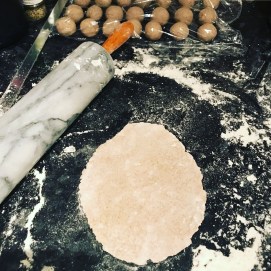
3. Roll the dough into a tube, and cut in half. Repeat twice, then cut each piece in three equal sizes. After these steps, you should end up with 24 fairly equal size pieces.

4. Roll each piece into a ball. Cover the balls with cling film to stop them from drying. One by one, flatten each ball by hand, then using a rolling pin roll into very thin, oval shapes.

5. Put rice filling on the centre of the dough, from one end to another, leaving unfilled dough on the sides.

6. Turn the furthest end of the dough from you over the filling, then the sides. Pinch the dough between your fingers as you’re moving towards the closer end to you (picture is of a cooked pie, as I forgot to take a picture before putting them in the oven, but it should still give you an idea).

7. Cook in oven 250°C (fan) / 480°F for 15 minutes.

8. Put some milk and butter (25g-50g) into a pan, and warm until the butter has melted. After you take the pies out of the oven, bathe each pie in the milk-butter mix, turning it so that both sides are fully submerged during the process.

French onion soup (with meat)

I remember the packet French onion soup from my childhood, that was used to enhance other foods, but we never ate it on its own. So I was intrigued to try to make my own, to see if I could change my mental image of this famous soup. As this soup requires beef stock, and for this kind of food I don’t like to use ready made ones, I made my own stock, and then decided to add some of the leftover meat into this soup, which actually worked really well.

1 litre beef stock Beef broth (stock)
4 large onions
25g butter
2 tbsp olive oil
1 tbsp caster sugar
3 tbsp cognac or brandy
150ml red wine
1 bay leaf
salt and black pepper to taste

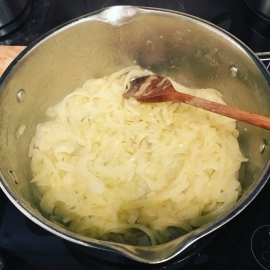
1. Peel and cut the onions in half, then slice thinly. Put in a pan together with the butter and oil. I think quite a large, deep pan is good for this, due to the flaming at later stage. On a low temperature, fry the onions for 20 minutes, until soft, stirring from time to time.

img_1921

2. Add the sugar, and fry, stirring occasionally, for another 20 minutes.

3. Add the cognac, and carefully set alight. I used long matches. At first, the flames will be quite big so stand back. They will however quickly reduce. The flambéing process reduces the alcoholic content in the food, whilst still keeping the flavours of the drink.

img_1922

4. Once the flames go out, add the red wine, stock, bay leaf, salt and pepper. Bring to boil, and simmer, covered, for 20 minutes.

5. Check the taste, and add salt and pepper if required.

6. As I made my stock particularly this soup in mind on the same day, I had all the meat left. Even though this soup is slightly sweet, I decided to add some of the meat into the soup. I just added the cooled, stripped meat pieces straight into the soup in the serving bowls.

Restaurant review: Fera, London

This restaurant is most of the time fully booked, and it’s easy to see why. As you step into the luxurious Claridge’s Hotel in Mayfair, in Central London, you can already get an idea what décor and ambience is waiting for you at the actual Fera restaurant. The food is worthy of their 1 Michelin star, with great attention to detail applied. For each course, before actually placing anything in your mouth, the food has already visually satisfied your tastebuds.

The overall experience was as great as we remembered from our last visit, however there were few things that appeared a little too salty to our taste. The new Head Chef Matt Starling has done a great job at maintaining the standards this restaurant had under Simon Rogan. Not to mention, we went on a Saturday between Christmas and New Year, and I was so pleased that our Tasting Menu didn’t have ingredients that were leftovers from Christmas meals, but something completely different.

Another thing to mention, that is a good example of the quality of the place, is that from on our booking we had had an offer for free glasses of champagne. The champagne itself wasn’t any cheap version, but Laurent Perrier (our favourite brand we often buy). The kitchen tour we had afterwards was really interesting, it was great to get some insight to their preparation process. The service at Fera was really good. The staff were very skilled at reading us, being formal, but also informal.

For bread we had rye and stout bread (my husband particularly loved this), as well sourdough bread, which I thought very tasty, more than at most places. And our first test of a place of the softness of the butter was passed by flying colours, however it was too salty for us.

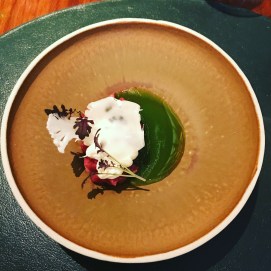
For appetisers we had a wonderful chickpea and rosemary wafer with cream cheese and mustard vinaigrette (that brought nice sharpness) with edible flowers. Everything worked very well together, and was extremely pleasing to the eye.

The starters of stewed rabbit with lovage, and scallop with John Dory and smoked roe were served a little bit like appetisers. The rabbit was very juicy. It was coated with dried onion, and served with lovage purée. It was a little messy to eat as you ate it by hand and it was bigger than one bite, but the flavour was really good. I also loved the smokiness of the seafood ‘tart’.


The second starter was beef tartare. It was very mild in flavour, but very enjoyable nevertheless. The whole dish was executed well, and all the flavours went really well together. We were also having the wine pairing for our menu, and were originally surprised to be served white wine with this course. The unexpected sharpness of the wine actually complimented the food extremely well.

For the fish course we had brill. It was juicy, but for me perhaps slightly overcooked. Something on the plate was too salty for us. We came to a conclusion it was the broccoli purée.

The main meat dish presented us with deer. I think this might be the best cooked deer I’ve ever had. As the meat of this animal is very lean, it can very easily become dry. Ours, however, were melt-in-the-mouth soft, tender and juicy. The blackberry element on the dish was powder, and it was also incorporated in the jus, however we felt it would’ve been nice to have couple of the actual berries on the plate, too. When the dish was served, all the other ingredients were hiding inside a king lettuce parcel. When you revealed what was inside the sight filled you with joy. Again, this dish, too, had something that was too salty. On this dish it was the mushroom purée.


The first dessert, a little bit like palate cleanser but with less sharpness and freshness, was bergamot foam, parsley cream and honey cake. On it’s own, I wasn’t a big fan of the parsley cream, but when you ate everything together all of the flavours complemented each other really well. The cake was like the currently trendy dehydrated cake, with nice crunch to it.

The main dessert of chocolate custard ganache, earl grey ice-cream, aerated milk cake and lemon granita was nice, however something didn’t entirely work for me. I think it might have been the ice-cream. Overall the dish was still nice enough.

Petit Fours were nice, my husband in fact couldn’t even wait for me to take the picture until he’d already had one.

img_1874

Rating: ★★★★☆